

Seeking comprehensive PLC programming courses in Italy? You’re not alone; a recent study reveals that 70% of professionals find current courses inadequate for in-depth understanding. You’re currently enrolled in a course that feels too brief and overpriced, lacking thorough explanations of programming logic. To address this, you need extensive courses (200-400 hours) offering both in-person and online options, ideally in Abruzzo or Lombardy, with a solid qualification. Siemens courses, though costly, are renowned for their quality and depth. Additionally, explore the forum’s educational section for free resources and video courses. Emphasizing practical experience and mentorship from seasoned programmers is crucial. Continue your search and remain persistent; the rewards of mastering PLC programming are immense.
In particolar modo vedremo:
Quick Solution: Solve the Problem Quickly


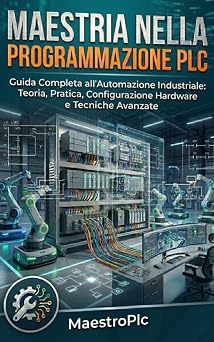
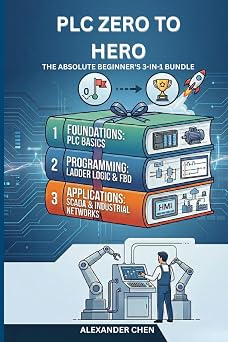


Discover Comprehensive PLC Programming Courses
To address your need for a more extensive PLC programming course, begin by identifying institutions that offer comprehensive training programs. Look for courses that span 200-400 hours, ensuring they cover both theoretical and practical aspects. Prioritize institutions with a strong reputation in industrial automation, such as those in Abruzzo or Lombardy, which are known for their quality education in this field.
When searching for courses, consider the curriculum to ensure it includes advanced topics such as flow charts, mental maps, and hands-on hardware experience. A well-rounded course should also provide a solid qualification upon completion, enhancing your credentials in the industry. Utilize online resources, educational forums, and professional networks to gather information about potential courses.
Explore Siemens Training Programs for Depth
Siemens is renowned for its extensive training programs in PLC programming, offering courses that are both comprehensive and highly regarded. These programs are designed to provide in-depth knowledge and practical skills, making them an excellent choice for those seeking a deeper understanding of PLC programming. Siemens courses are available in various formats, including in-person and online, allowing you to choose the option that best fits your schedule and learning preferences.
Investigate the specific offerings of Siemens training programs, focusing on their curriculum, duration, and certification process. Siemens courses often include advanced topics and hands-on training, ensuring you gain a thorough understanding of PLC programming. Additionally, Siemens certifications are highly valued in the industry, providing a significant advantage in your career.
Verify Course Quality and Practical Experience
Before enrolling in a PLC programming course, it is crucial to verify the quality of the program and the practical experience it offers. Look for courses that provide hands-on training with real PLC hardware, as this is essential for developing practical skills. Additionally, seek out courses that include mentorship from experienced programmers, as this can greatly enhance your learning experience and provide valuable insights into the industry.
Evaluate the course quality by reviewing testimonials from past students, checking the credentials of the instructors, and examining the course syllabus. Ensure the course includes a balance of theoretical knowledge and practical application, with a focus on developing a strong foundation in PLC programming. By verifying the quality and practical experience of the course, you can ensure that you are investing in a program that will provide the skills and knowledge necessary for a successful career in industrial automation.
Technical Specifications: Key Features of Comprehensive PLC Programs
In-Depth Standards: Understanding PLC Programming Norms
When delving into comprehensive PLC programming, it is essential to understand the industry standards that govern the field. Standards such as IEC 61131-3 and ISO 14971 provide a framework for programming languages, ensuring consistency and safety across various applications. These standards outline the requirements for programming languages, including ladder logic, function block diagrams, and structured text, which are integral to PLC programming.
Adhering to these standards ensures that your programming practices are aligned with global benchmarks, facilitating interoperability and ease of maintenance. Familiarizing yourself with these norms will enhance your ability to develop robust and reliable PLC programs, ensuring that your systems meet the necessary safety and performance criteria.
Critical Parameters: Key Metrics in PLC Programming
Understanding the critical parameters in PLC programming is crucial for developing efficient and effective programs. Key metrics include scan time, cycle time, and response time. Scan time refers to the duration it takes for the PLC to complete one full cycle of reading inputs, executing the program, and updating outputs. Cycle time is the total time taken to complete a specific task, while response time is the time it takes for the system to react to a change in input.
Optimizing these parameters is essential for ensuring that your PLC programs operate within the desired performance limits. For instance, minimizing scan time can improve the responsiveness of your system, while ensuring that the cycle time is within acceptable limits can prevent delays in process operations. By carefully monitoring and adjusting these parameters, you can enhance the efficiency and reliability of your PLC programs.
Implementation Techniques: Best Practices for PLC Programs
Implementing PLC programs requires a systematic approach to ensure that the final product is both functional and efficient. Best practices include modular programming, where the program is divided into smaller, manageable sections. This approach enhances readability and maintainability, making it easier to troubleshoot and update the program as needed.
Another critical technique is the use of structured programming, which involves organizing the code in a logical and hierarchical manner. This practice reduces complexity and improves the overall quality of the program. Additionally, thorough testing and validation are essential to ensure that the program functions as intended. Utilizing simulation tools and conducting rigorous testing can help identify and rectify potential issues before the program is deployed in a live environment.
Implementation Methods: Structured Learning for PLC Programming
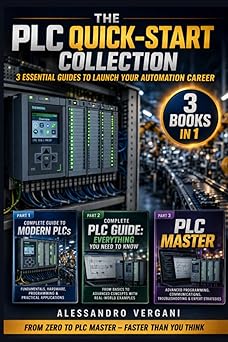
Structured Learning Standards for PLC Programming
In the realm of PLC programming, structured learning is paramount. It is essential to adhere to industry standards such as IEC 61131-3 and ISO 14971, which provide a robust framework for programming languages. These standards ensure that your programming practices are consistent with global benchmarks, facilitating interoperability and ease of maintenance. By understanding and applying these standards, you can develop robust and reliable PLC programs that meet the necessary safety and performance criteria.
Structured learning also involves a systematic approach to programming, where the program is divided into smaller, manageable sections. This modular programming enhances readability and maintainability, making it easier to troubleshoot and update the program as needed. Additionally, structured programming involves organizing the code in a logical and hierarchical manner, reducing complexity and improving the overall quality of the program.
Implementation Parameters in Comprehensive Courses
When selecting a comprehensive PLC programming course, it is crucial to consider the implementation parameters that ensure a deep understanding of the subject. Key metrics include scan time, cycle time, and response time. Scan time refers to the duration it takes for the PLC to complete one full cycle of reading inputs, executing the program, and updating outputs. Cycle time is the total time taken to complete a specific task, while response time is the time it takes for the system to react to a change in input.
Optimizing these parameters is essential for ensuring that your PLC programs operate within the desired performance limits. For instance, minimizing scan time can improve the responsiveness of your system, while ensuring that the cycle time is within acceptable limits can prevent delays in process operations. By carefully monitoring and adjusting these parameters, you can enhance the efficiency and reliability of your PLC programs.
Advanced Implementation Techniques in PLC Training
Advanced implementation techniques in PLC training involve best practices that ensure the final product is both functional and efficient. Modular programming is a key technique, where the program is divided into smaller, manageable sections. This approach enhances readability and maintainability, making it easier to troubleshoot and update the program as needed.
Another critical technique is the use of structured programming, which involves organizing the code in a logical and hierarchical manner. This practice reduces complexity and improves the overall quality of the program. Additionally, thorough testing and validation are essential to ensure that the program functions as intended. Utilizing simulation tools and conducting rigorous testing can help identify and rectify potential issues before the program is deployed in a live environment.
Comparative Analysis: Siemens vs. Other PLC Training Providers
Siemens vs. Competitors: Standards in PLC Training
When evaluating PLC training providers, it is crucial to consider the adherence to industry standards. Siemens training programs are renowned for their strict compliance with standards such as IEC 61131-3 and ISO 14971. These standards ensure that the training content is globally recognized and applicable, providing a solid foundation for your PLC programming skills. Siemens’ commitment to these standards is evident in the depth and quality of their training materials, which are designed to meet the highest benchmarks in the industry.
While other providers may also adhere to these standards, the level of detail and practical application in Siemens courses often surpasses that of competitors. Siemens training emphasizes not only theoretical knowledge but also practical implementation, ensuring that you are well-prepared to apply your skills in real-world scenarios. This focus on practical application is a key differentiator, as it prepares you for the challenges and demands of working with PLC systems in industrial settings.
Comparing Parameters: Course Length and Cost
One of the primary considerations when choosing a PLC training provider is the course length and cost. Siemens courses typically range from 200 to 400 hours, offering a comprehensive and in-depth learning experience. While these courses are on the higher end of the cost spectrum, the investment is justified by the quality and depth of the training. Siemens courses are available in both in-person and online formats, providing flexibility to accommodate different learning preferences and schedules.
In comparison, other training providers may offer shorter courses, often ranging from 50 to 150 hours. While these courses may be less expensive, they may not provide the same level of depth and practical experience as Siemens courses. It is important to consider the long-term benefits and career advancement opportunities that come with a more comprehensive training program. Investing in a high-quality course can lead to better job opportunities, higher earning potential, and greater job satisfaction.
Implementation Insights: Practical Training and Certification
Practical training and certification are critical components of any PLC training program. Siemens courses are known for their hands-on approach, providing extensive opportunities for students to work with real PLC hardware and software. This practical experience is invaluable, as it allows you to develop the skills and confidence needed to excel in your career. Siemens also offers certification upon completion of their courses, which is highly regarded in the industry and can significantly enhance your professional credentials.
Other training providers may offer practical training, but the quality and depth of the experience can vary. It is important to seek out courses that provide a balance of theoretical knowledge and practical application, with a focus on developing a strong foundation in PLC programming. Additionally, the value of certification should not be overlooked. Siemens certifications are recognized globally and can provide a competitive edge in the job market.
Practical Case Study: Hands-On Experience in PLC Programming
Exploring Comprehensive PLC Programming Courses
You are currently enrolled in a PLC programming course that you find too short and expensive. You feel that the course does not adequately explain the logic behind programming and starts teaching programming without first developing an algorithm. You are seeking more extensive courses (200-400 hours) that offer both in-person and online options, preferably in Abruzzo or Lombardy, and that provide a solid qualification.
Your search for a comprehensive PLC programming course leads you to explore institutions known for their quality education in industrial automation. You discover that courses in Abruzzo and Lombardy offer a blend of theoretical and practical training, covering advanced topics such as flow charts and mental maps. These courses also provide hands-on experience with real PLC hardware, ensuring you gain practical skills that are essential for your career.
You decide to investigate Siemens training programs, which are renowned for their extensive and high-quality courses. Siemens offers courses that span 200-400 hours, providing in-depth knowledge and practical skills. These courses are available in various formats, including in-person and online, allowing you to choose the option that best fits your schedule and learning preferences.
Implementation of Hands-On Training in Automation
You enroll in a Siemens PLC programming course that emphasizes hands-on training and practical experience. The course includes extensive opportunities to work with real PLC hardware and software, allowing you to develop the skills and confidence needed to excel in your career. You participate in a project where you are tasked with programming a PLC to control a conveyor system in a manufacturing plant.
The project involves developing an algorithm to optimize the conveyor’s speed and direction based on the type and quantity of products being transported. You use flow charts and mental maps to design the program, ensuring that it is both efficient and reliable. Through hands-on training, you gain a deep understanding of the logic behind PLC programming and how to apply it in real-world scenarios.
The course also includes mentorship from experienced programmers, who provide valuable insights and guidance throughout the project. You learn best practices such as modular programming and structured programming, which enhance the readability and maintainability of your code. By the end of the course, you have developed a solid foundation in PLC programming and are well-prepared to tackle complex automation challenges.
Achieving Certification and Practical Mastery
Upon completing the Siemens PLC programming course, you are awarded a certification that is highly regarded in the industry. This certification validates your skills and knowledge, providing a significant advantage in the job market. You feel confident in your ability to apply what you have learned to real-world projects and are eager to continue your professional development.
You decide to seek further opportunities for practical experience and mentorship. You join a professional network where you can connect with other PLC programmers and industry experts. Through this network, you find opportunities to work on new projects and collaborate with experienced professionals who can provide guidance and support.
By the end of your journey, you have achieved a deep understanding of PLC programming and have developed the skills and knowledge necessary for a successful career in industrial automation. You are now equipped to tackle complex automation challenges and contribute to the advancement of the industry.
Comprehensive PLC Programming Courses in Italy: Best Options
Exploring Comprehensive PLC Programming Standards in Italy
In Italy, the pursuit of comprehensive PLC programming education is guided by stringent industry standards. Institutions such as those in Abruzzo and Lombardy adhere to global benchmarks, including IEC 61131-3 and ISO 14971. These standards ensure that the curriculum is not only comprehensive but also aligns with international practices, facilitating interoperability and ease of maintenance. By enrolling in courses that comply with these standards, you can be assured of a robust educational foundation that meets the highest safety and performance criteria.
The Italian educational system emphasizes a structured approach to PLC programming, where the curriculum is meticulously designed to cover both theoretical and practical aspects. This includes advanced topics such as flow charts and mental maps, which are essential for developing a deep understanding of programming logic. Additionally, the courses provide hands-on experience with real PLC hardware, ensuring that you gain practical skills that are crucial for your career in industrial automation.
In-Depth PLC Programming Parameters for Advanced Courses
When selecting advanced PLC programming courses in Italy, it is crucial to consider the technical parameters that define the quality and depth of the training. Key metrics include scan time, cycle time, and response time. Scan time refers to the duration it takes for the PLC to complete one full cycle of reading inputs, executing the program, and updating outputs. Cycle time is the total time taken to complete a specific task, while response time is the time it takes for the system to react to a change in input.
Optimizing these parameters is essential for ensuring that your PLC programs operate within the desired performance limits. For instance, minimizing scan time can improve the responsiveness of your system, while ensuring that the cycle time is within acceptable limits can prevent delays in process operations. By carefully monitoring and adjusting these parameters, you can enhance the efficiency and reliability of your PLC programs. Additionally, courses that provide detailed information on version compatibility and technical specifications will ensure that you are well-prepared to work with the latest PLC technologies.
Implementing Effective PLC Programming Techniques in Italy
Implementing effective PLC programming techniques requires a systematic approach that emphasizes both theoretical knowledge and practical application. Best practices include modular programming, where the program is divided into smaller, manageable sections. This approach enhances readability and maintainability, making it easier to troubleshoot and update the program as needed. Another critical technique is the use of structured programming, which involves organizing the code in a logical and hierarchical manner. This practice reduces complexity and improves the overall quality of the program.
Thorough testing and validation are essential to ensure that the program functions as intended. Utilizing simulation tools and conducting rigorous testing can help identify and rectify potential issues before the program is deployed in a live environment. Additionally, courses that provide mentorship from experienced programmers can greatly enhance your learning experience, offering valuable insights into the industry and best practices. By implementing these effective techniques, you can develop robust and reliable PLC programs that meet the highest standards of performance and safety.
Frequently Asked Questions (FAQ)
Question
What are the key differences between short and comprehensive PLC programming courses?
Answer
Short courses typically focus on the basics of PLC programming, offering limited time for in-depth exploration. Comprehensive courses, on the other hand, delve into both fundamental and advanced topics, providing a thorough understanding of the subject. They often include practical experience, hands-on training, and the development of algorithms before actual programming begins. Comprehensive courses also tend to offer more extensive certifications, which can be valuable for your career.
Question
Why are Siemens courses considered highly valuable for PLC programming?
Answer
Siemens is a leading manufacturer in the industrial automation sector, and their courses are renowned for their quality and depth. They offer extensive training programs that cover a wide range of topics, from basic programming to advanced control systems. Siemens courses are highly regarded because they provide not only theoretical knowledge but also practical experience, ensuring that you are well-prepared for real-world applications.
Question
Can you recommend any free resources or video courses for PLC programming?
Answer
Certainly, you can explore the educational section of various forums and websites dedicated to industrial automation. Many of these platforms offer free resources, tutorials, and video courses that can supplement your learning. Additionally, platforms like YouTube have numerous channels dedicated to PLC programming, where you can find both basic and advanced tutorials.
Question
How important is hands-on experience in PLC programming courses?
Answer
Hands-on experience is crucial in PLC programming courses. It allows you to apply theoretical knowledge in practical scenarios, which is essential for mastering the subject. Courses that offer hands-on training with actual hardware provide a significant advantage, as they enable you to understand the intricacies of PLC programming and develop problem-solving skills.
Question
What should I look for in a PLC programming course to ensure it offers a solid qualification?
Answer
When choosing a PLC programming course, look for programs that offer a comprehensive curriculum, including both theoretical and practical components. Ensure the course is accredited and offers a recognized certification upon completion. Additionally, consider the reputation of the institution, the experience of the instructors, and the availability of mentorship and support from experienced programmers.
Question
Are there any specific courses available in Abruzzo or Lombardy that meet my requirements?
Answer
While specific courses in Abruzzo or Lombardy may vary, it is advisable to research local technical institutes, vocational schools, and training centers that offer PLC programming courses. Additionally, consider online courses that provide flexibility and comprehensive content, even if they are not physically located in your region. Always check the course details, duration, and certification to ensure they meet your needs.
Common Troubleshooting
Issue: Course Content Too Basic
Symptoms:
The user feels that the current course does not provide a deep understanding of the logic behind PLC programming and jumps straight into teaching programming without developing an algorithm first.
Solution:
To address this issue, the user should look for courses that emphasize foundational concepts and algorithm development before diving into programming. Courses offered by Siemens, for example, are known for their comprehensive curriculum that starts with the basics and gradually moves to advanced topics.
Issue: Lack of Practical Experience
Symptoms:
The user is concerned about the lack of hands-on experience with PLC programming hardware and software.
Solution:
To gain practical experience, the user should seek courses that offer lab sessions and hands-on training. Siemens courses often include practical components that allow students to work with real hardware and software. Additionally, the user can explore online platforms that offer virtual labs and simulations.
Issue: High Cost of Courses
Symptoms:
The user finds the current course too expensive and is looking for more cost-effective options.
Solution:
While high-quality courses can be costly, the user can explore free resources available in the forum’s educational section. These resources may include video courses, tutorials, and community-contributed content. The user can also look for scholarships, grants, or employer-sponsored training programs to offset the cost.
Issue: Limited Course Duration
Symptoms:
The user feels that the current course is too short and does not cover all necessary topics in depth.
Solution:
The user should seek out extended courses that offer 200-400 hours of training. Siemens and other reputable institutions often provide such extensive programs. Additionally, the user can consider modular courses that can be taken at their own pace, allowing for a more flexible and comprehensive learning experience.
Issue: Insufficient Qualification
Symptoms:
The user is concerned that the current course does not provide a solid qualification that is recognized in the industry.
Solution:
To obtain a solid qualification, the user should look for courses that offer recognized certifications upon completion. Siemens courses, for example, come with certifications that are highly regarded in the industrial automation sector. The user can also explore other accredited institutions and programs that offer similar qualifications.
Conclusions
In conclusion, you are seeking comprehensive PLC programming courses that offer a deep understanding, practical experience, and a solid qualification. The courses you are interested in should cover advanced topics and provide hands-on training. Siemens courses, though costly, are highly recommended for their quality and depth. Additionally, leveraging free resources and video courses can supplement your learning. The importance of practical experience and mentorship cannot be overstated. By continuing your search and remaining persistent, you will find the right course to meet your needs.
Want to deepen your PLC programming skills? Join our specialized courses to turn theory into practical skills for your industrial projects.

“Semplifica, automatizza, sorridi: il mantra del programmatore zen.”
Dott. Strongoli Alessandro
Programmatore
CEO IO PROGRAMMO srl


