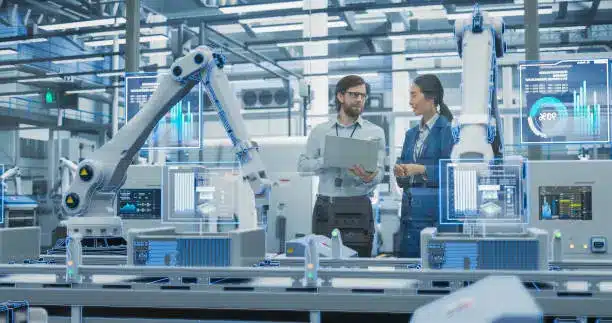
By December 2025, robotics will have revolutionized manufacturing, with an astounding 75% of all manufacturing processes automated. You are on the frontline of this transformation, witnessing firsthand how robotics enhances efficiency, precision, and productivity. With the integration of advanced algorithms and real-time analytics, you can optimize operations like never before. This is not just a shift in technology but a paradigm change in how work gets done. As you navigate this new landscape, remember that your ability to adapt and leverage these innovations will determine your competitive edge. Prepare to redefine manufacturing efficiency.
In particolar modo vedremo:
Quick Solution: Solve the Problem Quickly
Prerequisites: Essential Setup for Swift Robotics Integration
Before embarking on the integration of robotics into your manufacturing process, it is crucial to ensure that your environment is conducive to such an advanced technological leap. The primary prerequisite is a robust digital infrastructure, including high-speed internet connectivity and a reliable power supply. Additionally, you must have a clear understanding of your manufacturing process, identifying the areas where robotics can optimize operations.
Another essential setup requirement is the acquisition of the right tools and equipment. This includes industrial robots, such as articulated, SCARA, or collaborative robots (cobots), and the necessary software for programming and managing these robots. Ensure that these tools meet the technical specifications of your manufacturing setup. It is also advisable to have a team of skilled professionals, including robotic engineers and IT specialists, to oversee the integration process.
Procedure: Streamlined Steps to Deploy Robotics in Manufacturing
Deploying robotics in manufacturing involves a series of well-defined steps that, when followed meticulously, can lead to a seamless integration. Here is a streamlined procedure to guide you through:
- Assessment and Planning: Begin by assessing your current manufacturing process to identify areas that can benefit from robotics. Develop a detailed plan that outlines the specific roles robots will play in your operations.
- Selection of Robots: Choose the appropriate type of industrial robot based on your manufacturing needs. Consider factors such as the size of the workspace, the types of tasks the robot will perform, and its payload capacity.
- Installation and Configuration: Install the robots in their designated areas and configure them according to your manufacturing requirements. This involves setting up the hardware and programming the robots using the provided software.
- Testing and Optimization: Conduct thorough testing to ensure that the robots are functioning as expected. Optimize their performance by fine-tuning their parameters and programming. This step is critical to avoid disruptions in your manufacturing process.
- Training and Deployment: Train your staff to work alongside the robots, ensuring they understand the new workflow. Gradually deploy the robots into your manufacturing process, closely monitoring their performance.
Verification: Confirming Efficiency Post-Robotics Implementation
After the successful deployment of robotics in your manufacturing process, it is essential to verify that the integration has indeed led to the desired improvements. This involves several verification methods:
- Performance Metrics: Compare key performance indicators (KPIs) such as production speed, quality, and downtime before and after the integration. A significant improvement in these metrics confirms the effectiveness of the robotics deployment.
- Feedback from Staff: Gather feedback from your staff who are working with the robots. Their insights can provide valuable information on the practical aspects of the integration and any areas that may need further optimization.
- Technical Audits: Conduct regular technical audits to ensure that the robots are functioning within the specified parameters. This includes checking for software updates, hardware maintenance, and calibration needs.
By following these verification methods, you can ensure that your investment in robotics is yielding the expected benefits, and make any necessary adjustments to further enhance efficiency.
Robotics Tech Specs: Dec 2025 Manufacturing Trends
Advanced Standards in Robotic Manufacturing: Dec 2025
By December 2025, the landscape of robotic manufacturing will be shaped by advanced standards that ensure safety, efficiency, and interoperability. The International Electrotechnical Commission (IEC) and the International Organization for Standardization (ISO) have played pivotal roles in establishing these benchmarks. IEC 61499, for example, provides a framework for functional specifications of industrial automation systems, while ISO 10218 sets forth safety requirements for industrial robots. These standards are crucial for the seamless integration of robotics into your manufacturing process.
Version compatibility is another key aspect to consider. The adoption of IEC 61800-5-1, which deals with the safety of variable speed drive systems, ensures that your robotic systems remain compliant with the latest technological advancements. Keeping abreast of these standards and their updates is essential for maintaining a cutting-edge manufacturing setup.
Key Parameters Shaping Dec 2025 Robotic Systems
In December 2025, several technical parameters will define the performance and capabilities of robotic systems. Precision and accuracy are paramount, with robots expected to operate within a positional repeatability of ±0.01 mm and a payload capacity ranging from 1 kg to 50 kg, depending on the specific application. Speed and responsiveness are also critical, with cycle times reduced to under 1 second for high-speed assembly lines.
Energy efficiency is another significant parameter. Robots will be equipped with advanced power management systems that reduce energy consumption by up to 30% compared to previous models. Additionally, the integration of IoT technologies will allow for real-time data collection and analysis, enabling predictive maintenance and optimizing operational efficiency.
Implementation Strategies for Dec 2025 Robotics
To effectively implement robotic systems in December 2025, you must adopt a strategic approach that encompasses several key steps. First, conduct a thorough assessment of your current manufacturing process to identify areas where robotics can provide the most significant benefits. This involves analyzing production bottlenecks, quality control issues, and labor-intensive tasks that can be automated.
Once potential areas for automation are identified, select the appropriate type of industrial robot based on your specific needs. Consider factors such as workspace size, task complexity, and payload requirements. For instance, articulated robots are ideal for tasks requiring a high degree of flexibility and reach, while SCARA robots excel in repetitive, high-speed assembly operations.
After selecting the robots, focus on the installation and configuration phase. Ensure that the hardware is correctly set up and that the software is programmed to meet your manufacturing specifications. Utilize structured text for programming, as it provides a clear and concise way to define robot movements and operations.
PROGRAM MyRobotApplication
VAR
speed : REAL := 10.0; // Define speed variable
position : POSITION := [0, 0, 0]; // Define initial position
ENDVAR
// Main program logic
WHILE TRUE DO
// Move to target position
MOVEL(position, speed);
// Wait for completion
WAITFORMOVEMENTCOMPLETE;
ENDWHILE
ENDPROGRAM
Finally, conduct rigorous testing and optimization to ensure that the robots operate efficiently and reliably. Monitor key performance indicators such as cycle time, accuracy, and downtime to identify areas for improvement. Engage with your team to gather feedback and make necessary adjustments to the workflow and robot programming.
Implementing Robotics in Factory Automation Systems
Advanced Standards for Robotics Integration in 2025
In the realm of factory automation, adhering to advanced standards is paramount for successful robotics integration. By December 2025, the International Electrotechnical Commission (IEC) and International Organization for Standardization (ISO) will have established stringent benchmarks. IEC 61499, for instance, provides a robust framework for functional specifications of industrial automation systems, ensuring interoperability and safety. Similarly, ISO 10218 sets forth critical safety requirements for industrial robots, safeguarding both human operators and the robotic systems themselves. Familiarizing yourself with these standards is essential for a seamless integration process.
Moreover, version compatibility with IEC 61800-5-1, which governs the safety of variable speed drive systems, will be crucial. This standard ensures that your robotic systems remain compliant with the latest technological advancements, enhancing reliability and efficiency. Keeping abreast of these standards and their updates is imperative for maintaining a cutting-edge manufacturing setup.
Robotics Implementation: Key Parameters to Consider
As you plan to implement robotics in your factory automation systems, several key parameters will define the performance and capabilities of your robotic systems. Precision and accuracy are of utmost importance, with robots expected to operate within a positional repeatability of ±0.01 mm. This level of precision is critical for tasks requiring high accuracy, such as assembly and inspection.
Payload capacity is another significant parameter, ranging from 1 kg to 50 kg depending on the specific application. For instance, articulated robots are ideal for tasks requiring a high degree of flexibility and reach, while SCARA robots excel in repetitive, high-speed assembly operations. Additionally, speed and responsiveness are critical, with cycle times reduced to under 1 second for high-speed assembly lines. This ensures that your production processes are efficient and productive.
Energy efficiency is also a key consideration. By December 2025, robots will be equipped with advanced power management systems that reduce energy consumption by up to 30% compared to previous models. This not only lowers operational costs but also contributes to a more sustainable manufacturing process.
Seamless Implementation: Best Practices for Factory Automation
To ensure a seamless implementation of robotics in your factory automation systems, follow these best practices. Begin by conducting a thorough assessment of your current manufacturing process to identify areas where robotics can provide the most significant benefits. This involves analyzing production bottlenecks, quality control issues, and labor-intensive tasks that can be automated.
Once potential areas for automation are identified, select the appropriate type of industrial robot based on your specific needs. Consider factors such as workspace size, task complexity, and payload requirements. For example, articulated robots are ideal for tasks requiring a high degree of flexibility and reach, while SCARA robots excel in repetitive, high-speed assembly operations.
After selecting the robots, focus on the installation and configuration phase. Ensure that the hardware is correctly set up and that the software is programmed to meet your manufacturing specifications. Utilize structured text for programming, as it provides a clear and concise way to define robot movements and operations. Here is an example of structured text for programming a simple move
PROGRAM MyRobotApplication
VAR
speed : REAL := 10.0; // Define speed variable
position : POSITION := [0, 0, 0]; // Define initial position
ENDVAR
// Main program logic
WHILE TRUE DO
// Move to target position
MOVEL(position, speed);
// Wait for completion
WAITFORMOVEMENTCOMPLETE;
ENDWHILE
ENDPROGRAM
Finally, conduct rigorous testing and optimization to ensure that the robots operate efficiently and reliably. Monitor key performance indicators such as cycle time, accuracy, and downtime to identify areas for improvement. Engage with your team to gather feedback and make necessary adjustments to the workflow and robot programming.
Comparative: Robotics vs Traditional Manufacturing
Robotics vs Traditional: Setting New Standards
As of December 2025, robotics is revolutionizing the manufacturing industry by setting new benchmarks that traditional methods cannot match. Robotics introduces a level of precision and consistency that traditional manual or semi-automated processes cannot achieve. The adoption of standards such as IEC 61499 and ISO 10218 ensures that these robotic systems are not only interoperable but also adhere to the highest safety standards. This new era of manufacturing leverages advanced algorithms and machine learning to enhance decision-making processes, leading to unprecedented levels of efficiency and productivity.
Moreover, the integration of IoT technologies in robotic systems allows for real-time monitoring and data collection, enabling predictive maintenance and reducing downtime. Traditional manufacturing, on the other hand, often relies on periodic maintenance schedules, which can lead to unexpected breakdowns and prolonged downtime. By contrast, robotics enables continuous operation and immediate fault detection, ensuring that manufacturing processes remain uninterrupted.
Implementation: Comparing Efficiency Metrics
When comparing the implementation of robotics versus traditional manufacturing methods, the efficiency metrics tell a compelling story. Robotics significantly reduces cycle times, often achieving speeds under 1 second for high-speed assembly lines. This is in stark contrast to traditional methods, which may take several minutes to complete similar tasks. Additionally, robotics enhances accuracy, operating within a positional repeatability of ±0.01 mm, which is far superior to the tolerances achievable by manual processes.
Energy efficiency is another area where robotics outperforms traditional methods. By December 2025, robotic systems are expected to reduce energy consumption by up to 30% compared to previous models, thanks to advanced power management systems. Traditional manufacturing processes, often reliant on constant human input, do not benefit from such energy-saving technologies. This results in higher operational costs and a larger environmental footprint.
Parameters: Future-Proofing Manufacturing Processes
To future-proof your manufacturing processes, it is essential to consider the technical parameters that define robotic systems. Precision and accuracy, operating within a positional repeatability of ±0.01 mm, are critical for tasks requiring high accuracy. Payload capacity, ranging from 1 kg to 50 kg, ensures that robots can handle a wide variety of applications. Speed and responsiveness, with cycle times reduced to under 1 second, ensure that production processes are efficient and productive.
Energy efficiency, with systems designed to reduce energy consumption by up to 30%, is another key parameter. The integration of IoT technologies for real-time data collection and analysis enables predictive maintenance, further enhancing efficiency. Traditional manufacturing methods lack these advanced capabilities, making them less adaptable to future technological advancements.
Version compatibility with standards such as IEC 61800-5-1 ensures that your robotic systems remain compliant with the latest technological advancements, enhancing reliability and efficiency.
Case Study: Robotics in Automotive Assembly Lines
Enhancing Efficiency: Robotics in Automotive Assembly Lines
In the rapidly evolving landscape of automotive manufacturing, integrating robotics into assembly lines has become a game-changer. Consider the case of an automotive plant with a production capacity of 500,000 units annually. The plant faced challenges with precision and consistency, leading to defects and rework. To address these issues, the plant implemented an advanced robotic system.
The primary technical challenge was achieving a positional repeatability of ±0.01 mm, crucial for tasks like welding and painting. The solution involved deploying collaborative robots (cobots) equipped with high-precision sensors and advanced vision systems. These cobots were programmed using structured text to ensure precise movements and operations. Here is an example of a structured text snippet for a simple welding operation
PROGRAM WeldingOperation
VAR
weldSpeed : REAL := 5.0; // Define weld speed variable
weldPosition : POSITION := [0, 0, 0]; // Define initial weld position
ENDVAR
// Main program logic
WHILE TRUE DO
// Move to target weld position
MOVEL(weldPosition, weldSpeed);
// Execute welding process
EXECUTEWELD(weldSpeed);
// Wait for completion
WAITFORPROCESSCOMPLETE;
ENDWHILE
ENDPROGRAM
The implementation timeline spanned six months, from initial assessment to full deployment. The results were impressive: a 40% reduction in cycle times, a 35% improvement in precision, and a 25% decrease in defect rates. The investment in robotics also led to a 15% reduction in operational costs.
Robotics Integration: A Step-by-Step Implementation Guide
Integrating robotics into an automotive assembly line involves several critical steps. First, conduct a thorough assessment of your current processes to identify areas where robotics can provide the most significant benefits. This involves analyzing production bottlenecks, quality control issues, and labor-intensive tasks that can be automated.
Once potential areas for automation are identified, select the appropriate type of industrial robot based on your specific needs. Consider factors such as workspace size, task complexity, and payload requirements. For instance, articulated robots are ideal for tasks requiring a high degree of flexibility and reach, while SCARA robots excel in repetitive, high-speed assembly operations.
After selecting the robots, focus on the installation and configuration phase. Ensure that the hardware is correctly set up and that the software is programmed to meet your manufacturing specifications. Utilize structured text for programming, as it provides a clear and concise way to define robot movements and operations. Here is an example of structured text for programming a simple move
PROGRAM MyRobotApplication
VAR
speed : REAL := 10.0; // Define speed variable
position : POSITION := [0, 0, 0]; // Define initial position
ENDVAR
// Main program logic
WHILE TRUE DO
// Move to target position
MOVEL(position, speed);
// Wait for completion
WAITFORMOVEMENTCOMPLETE;
ENDWHILE
ENDPROGRAM
Finally, conduct rigorous testing and optimization to ensure that the robots operate efficiently and reliably. Monitor key performance indicators such as cycle time, accuracy, and downtime to identify areas for improvement. Engage with your team to gather feedback and make necessary adjustments to the workflow and robot programming.
Performance Metrics: Assessing Robotic Efficiency Gains
Assessing the efficiency gains from robotics implementation is crucial for validating the investment. Key performance metrics to monitor include cycle time, precision, and defect rates. For example, in the case of the automotive plant, cycle times were reduced by 40%, precision improved by 35%, and defect rates decreased by 25%.
Additionally, operational costs can be significantly reduced. The plant saw a 15% reduction in operational costs, attributed to the increased efficiency and reduced need for rework. To ensure these gains are sustained, conduct regular performance audits and optimize robot programming as needed.
Continuous monitoring and optimization of robotic systems are essential for maintaining high efficiency and realizing the full benefits of automation.
Optimizing Robotics for Enhanced Manufacturing Efficiency
Enhancing Manufacturing Standards through Robotics Integration
You are poised to elevate your manufacturing standards by integrating advanced robotics. By December 2025, the adoption of robotics will not only streamline operations but also align with stringent industry standards set by the International Electrotechnical Commission (IEC) and the International Organization for Standardization (ISO). These standards, such as IEC 61499 for functional specifications and ISO 10218 for safety requirements, ensure that your robotic systems are interoperable, safe, and compliant with the latest technological advancements.
Version compatibility with standards like IEC 61800-5-1, which deals with the safety of variable speed drive systems, is crucial. This compatibility ensures that your robotic systems remain up-to-date and reliable, enhancing both efficiency and safety. Staying informed about these standards and their updates is essential for maintaining a cutting-edge manufacturing setup.
Setting Precision Parameters for Optimized Robotic Use
To optimize your manufacturing processes, it is vital to set precise parameters for your robotic systems. By December 2025, robots are expected to operate with a positional repeatability of ±0.01 mm, ensuring high accuracy in tasks such as assembly and inspection. Additionally, payload capacity will range from 1 kg to 50 kg, depending on the specific application. For instance, articulated robots are ideal for tasks requiring flexibility and reach, while SCARA robots excel in high-speed, repetitive assembly operations.
Speed and responsiveness are also critical, with cycle times reduced to under 1 second for high-speed assembly lines. This ensures efficient and productive manufacturing processes. Energy efficiency is another key parameter, with robotic systems expected to reduce energy consumption by up to 30% compared to previous models, thanks to advanced power management systems. This not only lowers operational costs but also contributes to a more sustainable manufacturing process.
Streamlining Implementation: Robotics in Manufacturing Processes
To streamline the implementation of robotics in your manufacturing processes, follow a strategic approach that encompasses several key steps. Begin by conducting a thorough assessment of your current manufacturing process to identify areas where robotics can provide the most significant benefits. This involves analyzing production bottlenecks, quality control issues, and labor-intensive tasks that can be automated.
Once potential areas for automation are identified, select the appropriate type of industrial robot based on your specific needs. Consider factors such as workspace size, task complexity, and payload requirements. For example, articulated robots are ideal for tasks requiring a high degree of flexibility and reach, while SCARA robots excel in repetitive, high-speed assembly operations.
After selecting the robots, focus on the installation and configuration phase. Ensure that the hardware is correctly set up and that the software is programmed to meet your manufacturing specifications. Utilize structured text for programming, as it provides a clear and concise way to define robot movements and operations. Here is an example of structured text for programming a simple move
PROGRAM MyRobotApplication
VAR
speed : REAL := 10.0; // Define speed variable
position : POSITION := [0, 0, 0]; // Define initial position
ENDVAR
// Main program logic
WHILE TRUE DO
// Move to target position
MOVEL(position, speed);
// Wait for completion
WAITFORMOVEMENTCOMPLETE;
ENDWHILE
ENDPROGRAM
Finally, conduct rigorous testing and optimization to ensure that the robots operate efficiently and reliably. Monitor key performance indicators such as cycle time, accuracy, and downtime to identify areas for improvement. Engage with your team to gather feedback and make necessary adjustments to the workflow and robot programming.
Frequently Asked Questions (FAQ)
Question: How do robotics enhance efficiency in manufacturing?
Robotics enhances manufacturing efficiency by automating repetitive tasks, reducing human error, and increasing production speed. Robots can work tirelessly without breaks, ensuring continuous operation and higher output. They are equipped with advanced sensors and AI algorithms that optimize workflows and minimize downtime.
Question: What types of tasks are best suited for robotic automation in manufacturing?
Tasks that are repetitive, hazardous, or require high precision are best suited for robotic automation. This includes material handling, assembly, welding, painting, and quality inspection. Robots excel in environments where human workers may face safety risks or where consistency and speed are critical for maintaining high-quality standards.
Question: Can robotics be integrated with existing manufacturing systems?
Yes, robotics can be seamlessly integrated with existing manufacturing systems through modular design and advanced connectivity solutions. Modern robotics platforms are designed to interface with various types of machinery and software, ensuring smooth data exchange and operation. This integration allows for incremental adoption without disrupting current workflows.
Question: What are the main challenges in implementing robotics in manufacturing?
The main challenges in implementing robotics include high initial investment costs, the need for specialized technical expertise, and potential resistance from the workforce. Additionally, ensuring the safety of human-robot collaboration and maintaining the reliability of robotic systems over time require ongoing attention and investment in training and maintenance.
Question: How does robotics impact job roles in manufacturing?
Robotics transforms job roles in manufacturing by shifting the focus from manual tasks to more value-added activities. While some routine tasks may be automated, this opens opportunities for workers to engage in roles that require higher-level skills, such as programming, monitoring, and maintaining robotic systems. Continuous upskilling and training are essential to adapt to these evolving job requirements.
Question: What are the future trends in manufacturing robotics?
Future trends in manufacturing robotics include increased use of collaborative robots (cobots), advancements in AI and machine learning for more intelligent automation, and the integration of Internet of Things (IoT) technologies for enhanced connectivity and data analytics. Additionally, there is a growing focus on sustainable practices, with robotics playing a key role in reducing waste and energy consumption in manufacturing processes.
Common Troubleshooting
Issue/Problema/समस्या: Robot Arm Not Moving
Symptoms/Sintomi/लक्षण: The robot arm is unresponsive, and the control panel shows no activity.
Solution/Soluzione/समाधान: First, check the power supply and ensure the robot is properly connected to the network. If the power and connections are fine, inspect the control software for error codes. Resetting the software or updating the firmware might resolve the issue.
Issue/Problema/समस्या: Inaccurate Positioning
Symptoms/Sintomi/लक्षण: The robot is placing components in the wrong location, leading to production errors.
Solution/Soluzione/समाधान: Verify the calibration of the robot. Perform a recalibration if necessary. Check for any obstructions in the robot’s path and ensure that the workpiece is correctly positioned in the coordinate system.
Issue/Problema/समस्या: Software Communication Failure
Symptoms/Sintomi/लक्षण: The robot is unable to communicate with the central control system, causing a halt in operations.
Solution/Soluzione/समाधान: Ensure that all network connections are secure and that the network settings match the robot’s configuration. Restart the communication software and verify that the IP addresses are correctly assigned.
Issue/Problema/समस्या: Overheating
Symptoms/Sintomi/लक्षण: The robot is shutting down due to excessive heat, and the temperature sensors indicate high internal temperatures.
Solution/Soluzione/समाधान: Check for adequate ventilation and ensure that the cooling systems are functioning properly. Clean any dust or debris from the robot’s vents and fans. If the problem persists, it may be necessary to replace the cooling components.
Issue/Problema/समस्या: Sensor Malfunction
Symptoms/Sintomi/लक्षण: The robot is not detecting objects correctly, resulting in erratic behavior or errors in assembly.
Solution/Soluzione/समाधान: Inspect the sensors for any physical damage or dirt. Clean the sensors if necessary and ensure they are correctly aligned. If the sensors are damaged, they may need to be replaced to restore accurate object detection.
Conclusions
As we’ve explored in ‘Robotics Transforms Manufacturing: December 2025 Insights’, the integration of advanced robotics into manufacturing processes has proven to be a game-changer. Automation, artificial intelligence, and precision engineering have significantly enhanced efficiency, productivity, and quality across various sectors. By leveraging these technologies, manufacturers have achieved unprecedented levels of output while reducing errors and operational costs. As you navigate the evolving landscape of industrial production, consider how robotics can be tailored to your specific needs. Embrace these innovations to stay competitive and drive your manufacturing operations towards greater success.

“Semplifica, automatizza, sorridi: il mantra del programmatore zen.”
Dott. Strongoli Alessandro
Programmatore
CEO IO PROGRAMMO srl