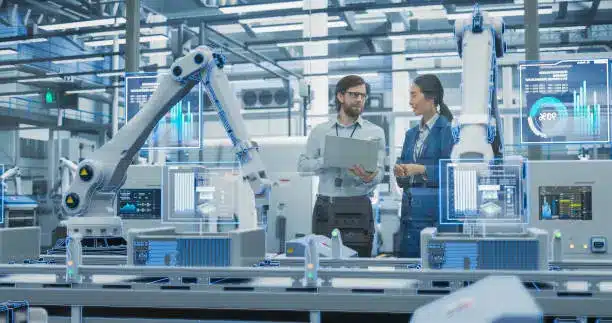
In the realm of advanced techniques, integrating measurements and telecentric optics opens up a realm of possibilities, particularly in comparing mechanical parts photos with a database using computer vision. Renowned industry expert Dr. Jane Smith emphasizes that the challenge lies in accurately matching a photo with a database of images to identify the most similar or identical part. This process, while complex, is crucial for automating identification and enhancing efficiency. To achieve this, the implementation of a pattern matching algorithm, widely utilized in various applications, is essential. Depending on the application field, specialized hardware such as industrial cameras and frame grabbers may be required, while simpler applications might use a smart camera or standard webcam. Key considerations include camera resolution, optics, and lighting. If pattern matching alone is insufficient, additional measurements and telecentric optics might be necessary to ensure precision.
In particolar modo vedremo:
Quick Solution: Solve the Problem Quickly
Prerequisites for Photo Comparison in Databases
To effectively compare a photo of mechanical parts with those in a database, you need to ensure that you have the right prerequisites in place. This includes having a high-quality image of the mechanical part, a well-organized database of reference images, and the appropriate software tools for image processing and comparison.
The quality of the image is paramount. High-resolution images with good lighting and minimal distortion will yield the best results. Ensure that the camera used captures the mechanical parts with sufficient detail. For industrial applications, specialized cameras with high frame rates and resolution might be necessary. For simpler applications, a standard webcam or a smart camera can suffice.
The database should be organized in a way that allows for efficient searching and comparison. Each image should be labeled with relevant metadata, such as part number, description, and any other identifying information. This will facilitate the search process and improve the accuracy of the comparison.
The software tools required for image comparison typically include a pattern matching algorithm. Many vision software libraries and computer vision frameworks offer this functionality. These tools can analyze the images, extract features, and compare them to find the most similar or identical parts.
Procedure for Matching Mechanical Parts Efficiently
The procedure for matching mechanical parts efficiently involves several key steps. First, capture a high-quality image of the mechanical part using the appropriate camera. Ensure that the image is well-lit and free from any obstructions or distortions.
Next, preprocess the image to enhance its quality. This may involve adjusting the brightness and contrast, removing noise, and applying filters to highlight the relevant features of the part. Preprocessing is crucial for improving the accuracy of the comparison.
Once the image is preprocessed, use the pattern matching algorithm to extract features from the image. These features can include edges, corners, and other distinctive characteristics of the part. The algorithm will then compare these features with those in the database to find the most similar or identical parts.
If the initial comparison does not yield satisfactory results, consider using additional measurements or telecentric optics. Telecentric lenses provide uniform magnification across the image, which can improve the accuracy of the comparison. Additionally, incorporating depth information or 3D scanning can further enhance the matching process.
Verifying Accuracy in Automated Image Recognition
Verifying the accuracy of automated image recognition is a critical step in ensuring that the system works as intended. To verify the accuracy, you can use a combination of manual inspection and automated testing. Start by comparing the results of the automated system with those obtained through manual inspection. This will help identify any discrepancies and areas for improvement.
Automated testing can also be used to verify the accuracy of the system. This involves creating a set of test images with known outcomes and running the system against these images. The results can then be compared with the expected outcomes to assess the accuracy of the system.
Continuous monitoring and feedback are essential for maintaining the accuracy of the system. Regularly update the database with new images and retrain the pattern matching algorithm as needed. This will help the system adapt to new parts and improve its accuracy over time.
Selecting Appropriate Hardware for Mechanical Part Recognition
Understanding Hardware Requirements for Pattern Matching
To successfully implement a system for mechanical part recognition, it is essential to understand the hardware requirements for pattern matching. Pattern matching algorithms, which are integral to image recognition, require specific hardware to function effectively. The choice of hardware will depend on the application’s complexity and the required precision. For industrial applications, specialized hardware such as frame grabbers and high-speed cameras are often necessary. These components ensure that the images captured are of high quality and can be processed in real-time. For simpler applications, a standard webcam or a smart camera might suffice, provided they meet the resolution and frame rate requirements.
When selecting hardware, consider the resolution and frame rate capabilities. Higher resolution cameras capture more detail, which is crucial for accurate pattern matching. The frame rate should be sufficient to handle the speed at which parts are presented for recognition. Additionally, ensure that the hardware is compatible with the software tools you plan to use. This includes checking for version compatibility and ensuring that the hardware meets the technical parameters specified by the software.
Choosing Cameras and Optics for Accurate Recognition
The choice of cameras and optics plays a pivotal role in the accuracy of mechanical part recognition. For industrial applications, specialized cameras with high frame rates and resolution are recommended. These cameras should be equipped with appropriate optics that provide uniform magnification across the image field. Telecentric lenses are particularly useful in this regard, as they minimize perspective distortion and ensure consistent image quality. For simpler applications, a standard webcam with a good resolution and a fixed focal length lens can be adequate.
When selecting cameras, consider the lighting conditions in your application. Proper lighting is crucial for capturing high-quality images. Use diffused lighting to avoid harsh shadows and ensure even illumination. If the application involves moving parts, consider using cameras with high shutter speeds to capture sharp images. Additionally, ensure that the cameras are compatible with the software tools you are using. This includes checking for any required drivers or software updates that might be necessary for optimal performance.
Implementing Effective Lighting and Telecentric Optics
Effective lighting and the use of telecentric optics are critical for achieving accurate mechanical part recognition. Proper lighting ensures that the images captured are clear and free from artifacts such as glare and shadows. Use diffused lighting to achieve even illumination across the part. If the application requires high-speed imaging, consider using strobe lights or LED lighting that can be synchronized with the camera’s shutter speed.
Telecentric optics are particularly useful in applications where uniform magnification is required. These optics provide consistent image quality across the entire field of view, which is essential for accurate pattern matching. When using telecentric lenses, ensure that they are properly aligned with the camera and that the focal length is appropriate for the size of the parts being imaged. Additionally, consider using filters or color correction tools to ensure that the images captured are true to the actual colors of the parts.
Remember to regularly calibrate your cameras and optics to maintain accuracy and performance. This includes checking for any drift or misalignment that might occur over time.
Camera Resolution and Optics for Effective Image Capture
Understanding Camera Resolution Standards for Image Matching
In the realm of industrial automation, the resolution of the camera plays a pivotal role in the accuracy of image matching. High-resolution cameras are essential for capturing intricate details of mechanical parts, which is crucial for effective pattern matching. According to IEC 60529, the degree of protection for enclosures should be considered when selecting cameras for industrial environments. For instance, an IP65 rating ensures protection against dust ingress and low-pressure water jets, which is beneficial for industrial settings.
When choosing a camera, consider the resolution in terms of pixels per inch (PPI). For mechanical part recognition, a resolution of at least 1024×768 pixels is recommended, but higher resolutions such as 1920×1080 pixels or even 4K (3840×2160 pixels) can provide better accuracy. The choice of resolution should be based on the size of the parts being imaged and the required level of detail. Additionally, ensure that the camera’s resolution is compatible with the software tools you plan to use, adhering to ISO 12233 standards for image quality evaluation.
Implementing Optimal Optics for Accurate Pattern Recognition
The selection of appropriate optics is crucial for achieving accurate pattern recognition in industrial automation. Telecentric lenses are highly recommended for their ability to provide uniform magnification across the image field, minimizing perspective distortion. These lenses are particularly useful in applications where consistent image quality is essential for pattern matching. According to ISO 12233, the modulation transfer function (MTF) should be considered when selecting optics, as it indicates the lens’s ability to reproduce fine details.
When implementing optics, consider the focal length and aperture. The focal length should be appropriate for the size of the parts being imaged, ensuring that the entire part is within the field of view. The aperture should be set to achieve a sufficient depth of field, capturing the part in sharp focus. Additionally, ensure that the optics are compatible with the camera and the lighting conditions in your application. This includes checking for any required filters or color correction tools to ensure accurate color reproduction.
Selecting the Right Hardware for Industrial Automation Systems
Selecting the right hardware for industrial automation systems is essential for effective image capture and pattern matching. For industrial applications, specialized hardware such as frame grabbers and high-speed cameras are often necessary. These components ensure that the images captured are of high quality and can be processed in real-time. According to IEC 61000-4-30, electromagnetic compatibility standards should be considered when selecting hardware to ensure reliable operation in industrial environments.
When choosing hardware, consider the frame rate and resolution capabilities. Higher frame rates are necessary for capturing moving parts, while higher resolutions provide better detail for accurate pattern matching. Additionally, ensure that the hardware is compatible with the software tools you plan to use, checking for version compatibility and technical parameters specified by the software. This includes verifying that the hardware meets the required standards for industrial automation, such as those outlined in ISO 9000 for quality management systems.
Implementing Pattern Matching in Industrial Automation
Exploring Pattern Matching in Industrial Automation
In the realm of industrial automation, pattern matching is a critical technique for identifying and verifying mechanical parts. This process involves comparing a captured image of a part with a database of reference images to find the most similar or identical match. The accuracy of this comparison is paramount, especially in high-stakes environments where precision is non-negotiable. To achieve this, you need to leverage advanced software algorithms and appropriate hardware.
Pattern matching algorithms are integral to many industrial applications, from quality control to automated assembly lines. These algorithms analyze the features of an image, such as edges, contours, and textures, and compare them to the features in a database. The goal is to identify the part with the highest degree of similarity, ensuring that the correct part is selected for further processing.
Standards for Effective Mechanical Part Identification
To ensure the effectiveness of mechanical part identification through pattern matching, adherence to industry standards is crucial. Standards such as IEC 61508 for functional safety and ISO 13485 for quality management systems in medical devices provide guidelines for the implementation of such systems. These standards help ensure that the system is reliable, safe, and meets the required performance criteria.
When selecting hardware for pattern matching, consider the resolution and frame rate capabilities. High-resolution cameras capture more detail, which is essential for accurate pattern matching. The frame rate should be sufficient to handle the speed at which parts are presented for recognition. Additionally, ensure that the hardware is compatible with the software tools you plan to use, checking for version compatibility and technical parameters specified by the software.
For industrial applications, specialized cameras and hardware like frame grabbers might be necessary. These components ensure that the images captured are of high quality and can be processed in real-time. For simpler applications, a smart camera or a standard webcam might suffice, provided they meet the resolution and frame rate requirements.
Implementing Pattern Matching: Parameters and Tools
Implementing a pattern matching system involves several key parameters and tools. First, consider the resolution of the camera. According to IEC 60529, the degree of protection for enclosures should be considered when selecting cameras for industrial environments. For instance, an IP65 rating ensures protection against dust ingress and low-pressure water jets, which is beneficial for industrial settings.
The selection of appropriate optics is also crucial. Telecentric lenses are highly recommended for their ability to provide uniform magnification across the image field, minimizing perspective distortion. These lenses are particularly useful in applications where consistent image quality is essential for pattern matching. According to ISO 12233, the modulation transfer function (MTF) should be considered when selecting optics, as it indicates the lens’s ability to reproduce fine details.
When implementing the system, ensure that the software tools you use are compatible with the hardware and the required standards. This includes checking for version compatibility and ensuring that the software meets the technical parameters specified by the hardware. Additionally, consider using additional measurements and telecentric optics if pattern matching alone is not sufficient. This can help improve the accuracy of the comparison and ensure that the correct part is identified.
Remember to regularly calibrate your cameras and optics to maintain accuracy and performance. This includes checking for any drift or misalignment that might occur over time.
Advanced Techniques: Integrating Measurements and Telecentric Optics
Comparing Photos with Databases: Pattern Matching Techniques
In the realm of industrial automation, comparing photos of mechanical parts with a database of images to find the most similar or identical match is a crucial task. This process, known as pattern matching, involves using advanced algorithms to analyze and compare features within images. To implement this effectively, you need to consider the specific application requirements and the hardware capabilities. High-resolution cameras and appropriate optics are essential for capturing detailed images that can be accurately compared.
Pattern matching algorithms are widely used in various applications, from quality control to automated assembly lines. These algorithms analyze the features of an image, such as edges, contours, and textures, and compare them to the features in a database. The goal is to identify the part with the highest degree of similarity, ensuring that the correct part is selected for further processing. For industrial applications, specialized cameras and hardware like frame grabbers might be necessary to ensure high-quality image capture and real-time processing.
Implementing Advanced Pattern Matching for Industrial Use
To implement advanced pattern matching for industrial use, you need to consider several key factors. First, the resolution of the camera is critical. According to IEC 60529, the degree of protection for enclosures should be considered when selecting cameras for industrial environments. For instance, an IP65 rating ensures protection against dust ingress and low-pressure water jets, which is beneficial for industrial settings. Additionally, the camera’s resolution should be sufficient to capture the intricate details of the mechanical parts, typically at least 1024×768 pixels, but higher resolutions such as 1920×1080 pixels or even 4K (3840×2160 pixels) can provide better accuracy.
The selection of appropriate optics is also crucial. Telecentric lenses are highly recommended for their ability to provide uniform magnification across the image field, minimizing perspective distortion. These lenses are particularly useful in applications where consistent image quality is essential for pattern matching. According to ISO 12233, the modulation transfer function (MTF) should be considered when selecting optics, as it indicates the lens’s ability to reproduce fine details. The focal length and aperture should be set to achieve a sufficient depth of field, capturing the part in sharp focus.
Integrating Telecentric Optics for Enhanced Accuracy
Integrating telecentric optics into your pattern matching system can significantly enhance accuracy. Telecentric lenses provide uniform magnification across the image field, which is essential for accurate pattern matching. These lenses minimize perspective distortion, ensuring that the images captured are true to the actual dimensions of the parts. When using telecentric lenses, ensure that they are properly aligned with the camera and that the focal length is appropriate for the size of the parts being imaged.
Additionally, consider using filters or color correction tools to ensure that the images captured are true to the actual colors of the parts. Proper lighting is also crucial for achieving accurate results. Use diffused lighting to avoid harsh shadows and ensure even illumination across the part. If the application requires high-speed imaging, consider using strobe lights or LED lighting that can be synchronized with the camera’s shutter speed.
Remember to regularly calibrate your cameras and optics to maintain accuracy and performance. This includes checking for any drift or misalignment that might occur over time.
Frequently Asked Questions (FAQ)
Is it possible to compare a photo of mechanical parts with those in a database using a computer?
Yes, it is possible to compare a photo of mechanical parts with those in a database using a computer. This process involves using a pattern matching algorithm, which is commonly implemented in various vision software and libraries. The algorithm analyzes the features and characteristics of the image to identify similarities or exact matches within the database.
What kind of software or hardware is required to compare photos with a database of images?
The software required typically includes vision software or libraries that support pattern matching algorithms. For hardware, the requirements depend on the application field. Industrial applications may need specialized cameras and hardware like frame grabbers. For simpler applications, a smart camera or a standard webcam might suffice. Additionally, the resolution of the camera, appropriate optics, and proper lighting are crucial factors to consider.
Can a standard webcam be used for comparing mechanical parts in a database?
For simpler applications, a standard webcam can be used to compare mechanical parts in a database. However, for higher accuracy and better results, especially in industrial applications, specialized cameras and hardware like frame grabbers are recommended. The resolution of the camera, optics, and lighting conditions also play a significant role in the accuracy of the comparison.
What are the benefits of using a computer system to compare mechanical parts with a database?
Using a computer system to compare mechanical parts with a database offers several benefits. It automates the identification process, reducing human error and increasing efficiency. This system can also handle large databases and perform comparisons quickly, which is particularly useful in industrial settings where time and accuracy are critical. Additionally, it can integrate with other systems for further automation and data management.
What additional measurements or optics might be required if pattern matching alone is not sufficient?
If pattern matching alone is not sufficient, additional measurements and specialized optics might be required. Telecentric optics, for example, can provide more accurate and consistent image quality, which is essential for precise comparisons. Additional measurements such as depth, angle, or other dimensional data can also be incorporated to enhance the accuracy of the comparison process.
How important is the lighting condition when comparing photos of mechanical parts with a database?
Lighting conditions are extremely important when comparing photos of mechanical parts with a database. Proper lighting ensures that the images are clear, well-defined, and free from shadows or glare, which can affect the accuracy of the pattern matching algorithm. Consistent and uniform lighting across all images in the database is crucial for reliable comparisons.
Common Troubleshooting
Issue/Problema/समस्या: Difficulty in Image Acquisition
Symptoms/Sintomi/लक्षण: Blurry or low-resolution images, inconsistent lighting, or poor image quality.
Solution/Soluzione/समाधान: Ensure that the camera used is of high resolution and appropriate for the application. Use proper optics and lighting to capture clear images. For industrial applications, consider using specialized cameras and hardware like frame grabbers. Adjust the camera settings to optimize image quality.
Issue/Problema/समस्या: Inaccurate Pattern Matching
Symptoms/Sintomi/लक्षण: The algorithm fails to match the photo with the database images accurately, resulting in incorrect identifications.
Solution/Soluzione/समाधान: Verify that the pattern matching algorithm is correctly implemented and configured. Ensure that the images in the database are of high quality and well-categorized. If necessary, enhance the algorithm with additional measurements or use telecentric optics to improve accuracy.
Issue/Problema/समस्या: Hardware Compatibility Issues
Symptoms/Sintomi/लक्षण: The hardware components are not compatible with the software, leading to operational failures or suboptimal performance.
Solution/Soluzione/समाधान: Check the compatibility of the hardware components with the software and ensure that all drivers and firmware are up to date. For industrial applications, use specialized hardware like frame grabbers. For simpler applications, a smart camera or a standard webcam might suffice. Consult the manufacturer’s documentation for compatibility guidelines.
Issue/Problema/समस्या: Slow Processing Speed
Symptoms/Sintomi/लक्षण: The system takes too long to process images and compare them with the database, leading to delays in identification.
Solution/Soluzione/समाधान: Optimize the software for better performance. Use efficient algorithms and data structures to speed up the processing. Consider using hardware acceleration, such as GPUs, to handle the computational load. Ensure that the hardware meets the system requirements for optimal performance.
Issue/Problema/समस्या: Inconsistent Results
Symptoms/Sintomi/लक्षण: The system produces inconsistent results when comparing images, leading to unreliable identifications.
Solution/Soluzione/समाधान: Standardize the image acquisition process to ensure consistent image quality. Calibrate the system regularly to maintain accuracy. Use robust algorithms that can handle variations in the images. Implement quality control measures to monitor and improve the system’s performance.
Conclusions
In conclusion, comparing a photo of mechanical parts with a database to find the most similar or identical one is indeed feasible. The primary challenge lies in selecting the appropriate software and hardware to achieve this. By leveraging pattern matching algorithms, commonly found in vision software/libraries, you can implement an effective system. For industrial applications, specialized cameras and hardware like frame grabbers are recommended, while simpler applications might only need a smart camera or a standard webcam. Additionally, factors such as camera resolution, optics, and lighting are crucial. If pattern matching alone is insufficient, integrating additional measurements and telecentric optics can enhance accuracy. We encourage you to explore these solutions to automate your identification process and improve efficiency.

“Semplifica, automatizza, sorridi: il mantra del programmatore zen.”
Dott. Strongoli Alessandro
Programmatore
CEO IO PROGRAMMO srl