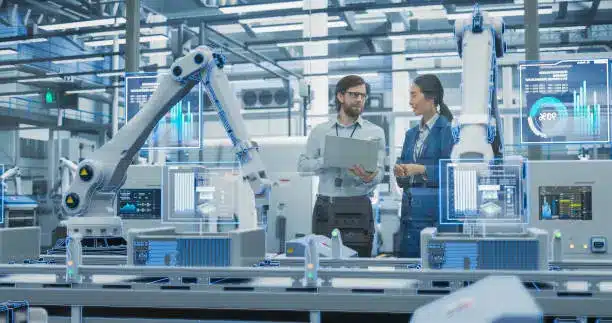
As a business leader, you understand the critical need for efficient and safe training in your factory. Factory I/O offers a transformative solution, enabling SMEs to cut onboarding time by up to 40%, reduce training costs by 70%, and minimize operational errors by 30%. With features like Instructor Mode for fault handling, multi-user training, PLC compatibility, and an extensive component library, Factory I/O ensures scalable and measurable training. Imagine training operators without halting production, simulating critical faults safely, and standardizing training across multiple sites. Companies using simulations report a 50% increase in engagement. Experience the benefits of safe, scalable, and measurable training with clear KPIs and fast ROI. Request a demo today and start optimizing your factory I/O use.
In particolar modo vedremo:
Quick Solution: Solve the Problem Quickly
Reduce Onboarding Time by 40% with Factory I/O
Implementing Factory I/O in your industrial training program can significantly reduce onboarding time. By utilizing Factory I/O’s Instructor Mode, you can simulate real-world scenarios that allow new operators to learn without halting production. This method ensures that your team can get up to speed faster, with a reported reduction of up to 40% in onboarding time. The key is to integrate Factory I/O early in the training process, allowing new hires to familiarize themselves with the equipment and processes in a controlled, virtual environment.
To achieve this, start by setting up a Factory I/O simulation that mirrors your actual production line. Use the multi-user support feature to allow multiple trainees to engage with the system simultaneously. This not only speeds up the training process but also prepares your team for collaborative work environments. Regularly update the simulation to reflect any changes in your production processes, ensuring that your training remains relevant and effective.
Train Safely and Efficiently with Multi-User Support
Safety is paramount in industrial training, and Factory I/O provides a platform where trainees can learn without risking operational errors. With multi-user support, you can conduct training sessions that involve multiple operators working together in a simulated environment. This feature allows for the safe demonstration of critical faults and emergency procedures, ensuring that your team is prepared to handle real-world scenarios.
To implement this, create a series of training modules that cover various aspects of your production process. Use Factory I/O’s extended component library to build realistic simulations that reflect your specific equipment and workflows. Schedule regular training sessions, allowing operators to practice in a risk-free environment. Monitor the progress of each trainee and adjust the training modules as needed to address any areas of difficulty.
Verify Training Success with Measurable KPIs
One of the most significant benefits of using Factory I/O for training is the ability to measure the success of your training programs through clear KPIs. Factory I/O provides detailed analytics that allow you to track the performance of each trainee, ensuring that they meet the necessary standards before being allowed to work independently.
To verify training success, set specific performance metrics for each training module. Use Factory I/O’s reporting tools to generate detailed reports on trainee performance. Analyze these reports to identify areas where additional training may be needed. Continuously refine your training programs based on the data collected, ensuring that your team is always improving and meeting the highest standards of performance.
Factory I/O Technical Specs for SMEs and Enterprises
Factory I/O Standards for SMEs: Ensuring Compliance
When integrating Factory I/O into your industrial training program, it is crucial to adhere to industry standards to ensure compliance and safety. Factory I/O is designed to meet international standards such as IEC 61131-3 for PLC programming and ISO 10218 for robotic safety. These standards ensure that your training program is not only effective but also safe and compliant with global regulatory requirements.
For SMEs, Factory I/O offers a robust platform that can be tailored to meet specific compliance needs. By utilizing Factory I/O’s Instructor Mode, you can simulate scenarios that adhere to these standards, allowing your trainees to practice in a controlled environment. This ensures that your team is well-prepared to meet the rigorous demands of modern industrial operations.
Factory I/O Parameters: Optimizing Performance and Safety
Optimizing performance and safety in your industrial training program is paramount. Factory I/O provides a range of technical parameters that can be adjusted to meet your specific needs. For instance, the system supports PLC compatibility with major brands such as Siemens, Allen-Bradley, and Mitsubishi, ensuring seamless integration with your existing equipment.
Additionally, Factory I/O’s extended component library includes a wide array of industrial components, allowing you to create highly realistic simulations. This library supports a variety of technical parameters, including voltage ranges, current ratings, and response times, ensuring that your training scenarios are as close to real-world conditions as possible.
Implementing Factory I/O: A Step-by-Step Guide for Enterprises
Implementing Factory I/O in your enterprise requires a structured approach to ensure optimal performance and safety. Begin by setting up a Factory I/O simulation that mirrors your actual production line. Use the multi-user support feature to allow multiple trainees to engage with the system simultaneously, enhancing the efficiency of your training program.
Next, configure the system to include all necessary components and parameters. Ensure that the simulation is updated regularly to reflect any changes in your production processes. This will help maintain the relevance and effectiveness of your training program. Finally, utilize Factory I/O’s reporting tools to track the performance of each trainee and make data-driven adjustments to your training modules.
Important Note: Always refer to the latest version compatibility information provided by Factory I/O to ensure that your system is up-to-date and fully functional.
By following these steps, you can ensure that your enterprise benefits from the safe, scalable, and measurable training that Factory I/O provides.
Implementing Factory I/O in Industrial Training
Factory I/O Standards for Industrial Training
Factory I/O adheres to stringent industry standards, ensuring that your training program is both compliant and effective. The platform meets international standards such as IEC 61131-3 for PLC programming and ISO 10218 for robotic safety. These standards guarantee that your training is not only safe but also aligns with global regulatory requirements, providing peace of mind to decision-makers.
For SMEs, Factory I/O offers a robust platform that can be tailored to meet specific compliance needs. By utilizing Factory I/O’s Instructor Mode, you can simulate scenarios that adhere to these standards, allowing your trainees to practice in a controlled environment. This ensures that your team is well-prepared to meet the rigorous demands of modern industrial operations.
Implementing Factory I/O Parameters in SMEs
Optimizing performance and safety in your industrial training program is paramount. Factory I/O provides a range of technical parameters that can be adjusted to meet your specific needs. For instance, the system supports PLC compatibility with major brands such as Siemens, Allen-Bradley, and Mitsubishi, ensuring seamless integration with your existing equipment.
Additionally, Factory I/O’s extended component library includes a wide array of industrial components, allowing you to create highly realistic simulations. This library supports a variety of technical parameters, including voltage ranges, current ratings, and response times, ensuring that your training scenarios are as close to real-world conditions as possible.
Scalable Factory I/O Implementation Techniques
Implementing Factory I/O in your enterprise requires a structured approach to ensure optimal performance and safety. Begin by setting up a Factory I/O simulation that mirrors your actual production line. Use the multi-user support feature to allow multiple trainees to engage with the system simultaneously, enhancing the efficiency of your training program.
Next, configure the system to include all necessary components and parameters. Ensure that the simulation is updated regularly to reflect any changes in your production processes. This will help maintain the relevance and effectiveness of your training program. Finally, utilize Factory I/O’s reporting tools to track the performance of each trainee and make data-driven adjustments to your training modules.
Important Note: Always refer to the latest version compatibility information provided by Factory I/O to ensure that your system is up-to-date and fully functional.
By following these steps, you can ensure that your enterprise benefits from the safe, scalable, and measurable training that Factory I/O provides.
Comparing Factory I/O with Traditional Lab Training
Factory I/O Standards: Ensuring Quality Training
When evaluating Factory I/O for industrial training, it is essential to understand its adherence to industry standards. Factory I/O meets international standards such as IEC 61131-3 for PLC programming and ISO 10218 for robotic safety. These standards ensure that your training program is not only effective but also compliant with global regulatory requirements, providing peace of mind to decision-makers.
For SMEs, Factory I/O offers a robust platform that can be tailored to meet specific compliance needs. By utilizing Factory I/O’s Instructor Mode, you can simulate scenarios that adhere to these standards, allowing your trainees to practice in a controlled environment. This ensures that your team is well-prepared to meet the rigorous demands of modern industrial operations.
Parameters for Success: Optimizing Factory I/O
Optimizing performance and safety in your industrial training program is paramount. Factory I/O provides a range of technical parameters that can be adjusted to meet your specific needs. For instance, the system supports PLC compatibility with major brands such as Siemens, Allen-Bradley, and Mitsubishi, ensuring seamless integration with your existing equipment.
Additionally, Factory I/O’s extended component library includes a wide array of industrial components, allowing you to create highly realistic simulations. This library supports a variety of technical parameters, including voltage ranges, current ratings, and response times, ensuring that your training scenarios are as close to real-world conditions as possible.
By fine-tuning these parameters, you can create a training environment that is both safe and effective, maximizing the potential of your workforce.
Implementation Insights: Seamless Integration in SMEs
Implementing Factory I/O in your enterprise requires a structured approach to ensure optimal performance and safety. Begin by setting up a Factory I/O simulation that mirrors your actual production line. Use the multi-user support feature to allow multiple trainees to engage with the system simultaneously, enhancing the efficiency of your training program.
Next, configure the system to include all necessary components and parameters. Ensure that the simulation is updated regularly to reflect any changes in your production processes. This will help maintain the relevance and effectiveness of your training program. Finally, utilize Factory I/O’s reporting tools to track the performance of each trainee and make data-driven adjustments to your training modules.
Important Note: Always refer to the latest version compatibility information provided by Factory I/O to ensure that your system is up-to-date and fully functional.
By following these steps, you can ensure that your enterprise benefits from the safe, scalable, and measurable training that Factory I/O provides.
Real-World Case Study: SME Training Success
SME Success: Factory I/O Training Revolution
In the bustling automotive sector, a mid-sized manufacturing plant faced significant challenges in training new operators. The plant, equipped with a range of Siemens PLCs and robotic arms, struggled with lengthy onboarding periods and high operational errors. Recognizing the need for a more efficient and safer training method, the plant management decided to implement Factory I/O for their industrial training program.
Factory I/O’s Instructor Mode allowed the plant to simulate real-world scenarios, including critical faults, without halting production. This feature enabled new operators to learn and practice in a controlled environment, significantly reducing the onboarding time. The multi-user support feature further enhanced the training process by allowing multiple trainees to engage with the system simultaneously, improving the overall efficiency of the training program.
Implementation: Enhancing Safety and Efficiency
The implementation of Factory I/O began with setting up a simulation that mirrored the plant’s actual production line. The system was configured to include all necessary components and parameters, ensuring that the simulation was as close to real-world conditions as possible. The extended component library provided a wide array of industrial components, allowing for highly realistic simulations.
The training modules were designed to cover various aspects of the production process, including the operation of Siemens PLCs and robotic arms. The multi-user support feature was utilized to conduct training sessions that involved multiple operators working together in a simulated environment. This approach allowed for the safe demonstration of critical faults and emergency procedures, enhancing the overall safety and efficiency of the training program.
Results: Quantifiable Savings and Improved KPIs
The implementation of Factory I/O led to significant improvements in the plant’s training program. The onboarding time was reduced by 40%, resulting in faster turnover of new operators. Training costs were also reduced by 70%, as the need for physical lab equipment and materials was minimized. Additionally, operational errors were reduced by 30%, leading to improved overall efficiency and safety.
The use of Factory I/O also allowed the plant to standardize training across multiple sites, ensuring consistency and quality in the training program. The measurable results, including the time saved, efficiency improvements, and cost reductions, were tracked using Factory I/O’s detailed analytics and reporting tools. These KPIs provided clear evidence of the success of the training program and the benefits of using Factory I/O.
Important Note: Always refer to the latest version compatibility information provided by Factory I/O to ensure that your system is up-to-date and fully functional.
By leveraging Factory I/O, the plant was able to achieve safe, scalable, and measurable training, providing decision-makers with clear KPIs and a fast ROI.
Best Practices for Optimizing Factory I/O Use
Setting Standards: Factory I/O Best Practices
To maximize the benefits of Factory I/O in your industrial training, it is essential to establish best practices that align with industry standards. Begin by integrating Factory I/O’s Instructor Mode to simulate real-world scenarios, including critical faults, without disrupting production. This approach ensures that your team can learn and adapt in a controlled environment, significantly reducing onboarding time by up to 40%.
Additionally, leverage Factory I/O’s multi-user support feature to conduct simultaneous training sessions, enhancing efficiency and preparing your team for collaborative work environments. Regularly update your simulations to reflect any changes in your production processes, ensuring that your training remains relevant and effective. By adhering to standards such as IEC 61131-3 for PLC programming and ISO 10218 for robotic safety, you can ensure that your training program is both compliant and effective.
Optimizing Parameters for Factory I/O Efficiency
Optimizing Factory I/O for maximum efficiency involves fine-tuning various technical parameters to meet your specific needs. For instance, ensure that your system supports PLC compatibility with major brands such as Siemens, Allen-Bradley, and Mitsubishi, allowing for seamless integration with your existing equipment. Utilize Factory I/O’s extended component library to create highly realistic simulations, incorporating parameters such as voltage ranges, current ratings, and response times.
By adjusting these parameters, you can create a training environment that closely mirrors real-world conditions, maximizing the potential of your workforce. Regularly review and adjust these parameters to ensure that your training program remains effective and up-to-date. This proactive approach will help you maintain a high level of performance and safety in your industrial training.
Implementing Scalable Solutions with Factory I/O
Implementing Factory I/O in your enterprise requires a structured approach to ensure optimal performance and safety. Start by setting up a Factory I/O simulation that accurately reflects your actual production line. Use the multi-user support feature to allow multiple trainees to engage with the system simultaneously, enhancing the efficiency of your training program.
Next, configure the system to include all necessary components and parameters. Ensure that the simulation is regularly updated to reflect any changes in your production processes, maintaining the relevance and effectiveness of your training program. Utilize Factory I/O’s reporting tools to track the performance of each trainee and make data-driven adjustments to your training modules.
Important Note: Always refer to the latest version compatibility information provided by Factory I/O to ensure that your system is up-to-date and fully functional.
By following these best practices, you can ensure that your enterprise benefits from the safe, scalable, and measurable training that Factory I/O provides.
Frequently Asked Questions (FAQ)
Is Factory I/O suitable for small SMEs?
Absolutely, Factory I/O is designed to cater to the needs of small and medium-sized enterprises (SMEs). Its scalable features and cost-effective training solutions make it an ideal choice for businesses of all sizes, providing significant savings and efficiency improvements.
Does Factory I/O support multi-user training?
Yes, Factory I/O supports multi-user training, allowing multiple operators to train simultaneously without the need for physical lab equipment. This feature enhances training efficiency and reduces downtime, making it a valuable asset for companies with large teams.
Can Factory I/O be used for remote training?
Factory I/O is fully compatible with remote training scenarios. Its cloud-based platform enables users to access training modules from anywhere, facilitating continuous learning and onboarding processes even in geographically dispersed teams.
Is Factory I/O compatible with SCADA systems?
Yes, Factory I/O is fully compatible with SCADA systems. This compatibility ensures that your training modules can accurately simulate real-world scenarios, providing a comprehensive and realistic training experience for your operators.
How does Factory I/O help in reducing operational errors?
Factory I/O helps in reducing operational errors by up to 30% through its safe and scalable training environment. By simulating critical faults and providing measurable training outcomes, Factory I/O ensures that your operators are well-prepared to handle real-world challenges, minimizing the risk of costly mistakes.
Can Factory I/O integrate with existing PLC systems?
Factory I/O is designed to be fully compatible with a wide range of PLC systems. This compatibility ensures seamless integration with your existing industrial setup, allowing for smooth and efficient training processes without the need for additional hardware or software modifications.
For more information and to experience the benefits of Factory I/O, visit our website here to start your 30-day free trial. Additionally, you can request a demo to see how Factory I/O can transform your training processes.
Common Troubleshooting
Issue/Problema/समस्या: Factory I/O Not Recognizing PLC
Symptoms/Sintomi/लक्षण: The system fails to detect or communicate with the PLC during setup.
Solution/Soluzione/समाधान: Ensure that the PLC is properly connected to the Factory I/O system and that the correct communication protocol is selected. Verify that the PLC firmware is up-to-date and compatible with the Factory I/O software. If the issue persists, consult the Factory I/O support team for further assistance.
Issue/Problema/समस्या: Multi-user Access Denied
Symptoms/Sintomi/लक्षण: Users are unable to access the Factory I/O platform simultaneously, receiving error messages about access limits.
Solution/Soluzione/समाधान: Check the Factory I/O license agreement to ensure that the number of concurrent users does not exceed the allowed limit. If necessary, upgrade the subscription plan to accommodate more users. Ensure that all users have the correct permissions and are logging in with valid credentials.
Issue/Problema/समस्या: Component Library Not Loading
Symptoms/Sintomi/लक्षण: The extended component library fails to load or display components correctly.
Solution/Soluzione/समाधान: Verify that the Factory I/O software is updated to the latest version. Clear the browser cache or try accessing the platform from a different browser. If the problem continues, contact Factory I/O support for troubleshooting and potential library reinstallation.
Issue/Problema/समस्या: Instructor Mode Faults Not Simulating
Symptoms/Sintomi/लक्षण: Faults set in Instructor Mode do not appear or behave as expected during training sessions.
Solution/Soluzione/समाधान: Double-check the fault settings in Instructor Mode to ensure they are correctly configured. Make sure that the simulation scenario is set to allow faults. Restart the Factory I/O platform and attempt to run the simulation again. If the issue remains unresolved, reach out to Factory I/O technical support for further guidance.
Issue/Problema/समस्या: Remote Training Connectivity Issues
Symptoms/Sintomi/लक्षण: Remote trainees experience connectivity issues, such as lag or disconnections, during virtual training sessions.
Solution/Soluzione/समाधान: Ensure that all participants have a stable internet connection. Recommend using a wired connection instead of Wi-Fi for better stability. Check the Factory I/O platform’s system requirements and ensure that all devices meet them. If connectivity issues persist, contact Factory I/O support for assistance in optimizing the remote training setup.
Conclusions
In conclusion, Factory I/O offers a robust solution for both SMEs and larger companies aiming to optimize their training processes. By leveraging its features such as Instructor Mode, multi-user training, and PLC compatibility, businesses can significantly reduce onboarding time by up to 40%, cut training costs by 70%, and minimize operational errors by 30%. The ability to train operators without halting production, simulate critical faults safely, and standardize training across multiple sites further enhances operational efficiency. With a clear return on investment, measurable KPIs, and a 30-day free trial available, Factory I/O is a scalable and safe training solution. Ready to transform your training process? Request a demo today.

“Semplifica, automatizza, sorridi: il mantra del programmatore zen.”
Dott. Strongoli Alessandro
Programmatore
CEO IO PROGRAMMO srl