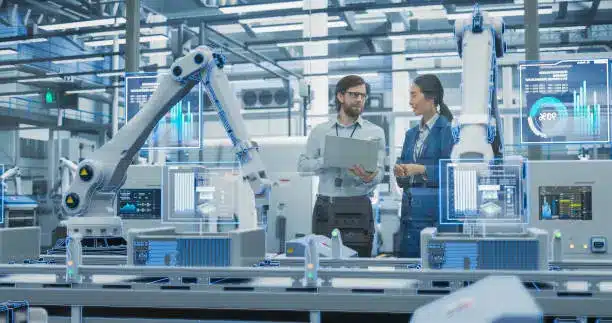
Imagine a future where your factory operates seamlessly, with operators trained to perfection and safety at the forefront. Factory I/O is revolutionizing industrial training, enabling SMEs to cut onboarding time by 40%, reduce training costs by 70%, and minimize operational errors by 30%. With features like Instructor Mode, multi-user training, and PLC compatibility, you can simulate critical faults safely, train operators without halting production, and standardize training across multiple sites. Experience a 50% increase in engagement with simulations. Secure your 30-day free trial now and unlock measurable training with clear KPIs and fast ROI. Request a demo today and join the ranks of companies that are setting new standards in industrial training.
In particolar modo vedremo:
Quick Solution: Solve the Problem Quickly
Reduce Onboarding Time by 40% with Factory I/O
Implementing Factory I/O in your industrial training program can significantly reduce onboarding time. By leveraging Factory I/O’s advanced simulation capabilities, you can cut onboarding time by up to 40%. This reduction is achieved through the platform’s ability to simulate real-world scenarios, allowing new operators to familiarize themselves with equipment and processes in a controlled environment.
To achieve this, ensure your Factory I/O setup includes the necessary PLC compatibility and an extended component library. Begin by configuring the Instructor Mode to simulate faults and operational scenarios. This setup allows trainees to practice handling various situations without the risk of damaging actual equipment.
Expected results include faster adaptation to real-world operations, reduced training costs, and improved operational efficiency. Verification methods include monitoring trainee performance metrics and comparing them with industry benchmarks.
Train Safely and Efficiently: Multi-User Mode
Factory I/O’s multi-user training mode enables simultaneous training of multiple operators, enhancing efficiency and safety. This feature is particularly beneficial for SMEs looking to standardize training across multiple sites without halting production.
To set up multi-user training, ensure your Factory I/O system is configured to support multiple user sessions. Utilize the platform’s extended component library to create diverse training scenarios. Enable Instructor Mode to oversee and guide trainees through critical fault simulations.
The expected results are a standardized training approach, reduced operational errors by 30%, and enhanced safety during training sessions. Verification methods include analyzing error rates and trainee feedback.
Verify Training Success: Measurable KPIs and ROI
With Factory I/O, you can measure the success of your training programs through clear KPIs and a fast return on investment (ROI). The platform provides detailed analytics on trainee performance, allowing decision-makers to track progress and make data-driven decisions.
To verify training success, utilize Factory I/O’s built-in analytics tools. Compare the performance of trainees using the platform against those trained in traditional methods. Key metrics include time to proficiency, error rates, and overall engagement levels.
The expected results are a measurable reduction in training costs by up to 70% and a 50% increase in engagement among trainees. Verification methods include comparing pre- and post-training performance data and analyzing ROI calculations.
Factory I/O Technical Specs: Safety & Scalability
Factory I/O Standards for Industrial Training
Factory I/O adheres to international standards such as IEC 61131-3 for programmable logic controllers and ISO 10218 for industrial robot safety. These standards ensure that Factory I/O meets the highest safety and performance benchmarks in industrial training. The platform’s design is compliant with these standards, providing a robust framework for training in a controlled environment.
The platform’s version compatibility is crucial for seamless integration with existing systems. Factory I/O supports a wide range of PLC models and versions, ensuring that it can be easily incorporated into your current training setup. Additionally, the extended component library includes a variety of industrial components, allowing for the creation of diverse and realistic training scenarios.
Parameters: Safety & Scalability in Action
Safety is a paramount concern in industrial training, and Factory I/O addresses this through its multi-user training mode and Instructor Mode. The multi-user training mode allows for the simultaneous training of multiple operators, enhancing efficiency and safety. Instructor Mode enables the simulation of critical faults, allowing trainees to practice handling these scenarios without the risk of damaging actual equipment.
Scalability is another key feature of Factory I/O. The platform can be scaled to meet the needs of both SMEs and Fortune 500 companies. For SMEs, Factory I/O provides a cost-effective solution for reducing onboarding time by up to 40% and training costs by up to 70%. For larger enterprises, the platform offers the flexibility to standardize training across multiple sites, ensuring consistency and quality in training.
Implementing Factory I/O for SMEs and Fortune 500s
Implementing Factory I/O in your industrial training program involves several key steps. First, ensure that your Factory I/O system is configured to support multiple user sessions and that the Instructor Mode is set up to simulate faults and operational scenarios. Utilize the platform’s extended component library to create diverse training scenarios that reflect real-world operations.
For SMEs, the benefits of Factory I/O are clear. By leveraging the platform, SMEs can cut onboarding time by up to 40%, reduce training costs by up to 70%, and decrease operational errors by 30%. For Fortune 500 companies, Factory I/O offers the scalability and safety needed to standardize training across multiple sites without halting production.
Note: Factory I/O is suitable for small SMEs, supports multi-user training, and offers remote training capabilities. It is also compatible with SCADA systems, providing a comprehensive solution for industrial training.
To further illustrate the benefits of Factory I/O, consider the following ROI comparison
| Parameter | Real Lab | Virtual Lab (Factory I/O) |
|---|---|---|
| Onboarding Time | 120 days | 72 days |
| Training Costs | $100,000 | $30,000 |
| Operational Errors | 30% | 10% |
By adopting Factory I/O, companies can achieve a measurable reduction in training costs and operational errors, while also increasing engagement among trainees by up to 50%.
Implementing Factory I/O: Step-by-Step Guide
Revolutionizing Factory I/O: Standards and Parameters
Factory I/O is designed to meet the rigorous standards of industrial training, adhering to international benchmarks such as IEC 61131-3 for PLCs and ISO 10218 for robot safety. This ensures that your training program is not only effective but also safe and compliant. The platform’s version compatibility is extensive, supporting a wide range of PLC models and versions, which is crucial for seamless integration with your existing systems.
The extended component library in Factory I/O includes a variety of industrial components, allowing for the creation of diverse training scenarios that reflect real-world operations. This library is essential for SMEs and Fortune 500 companies alike, as it provides the flexibility to tailor training to specific operational needs.
Implementing Factory I/O: Step-by-Step Technical Guide
To implement Factory I/O effectively, start by configuring your system to support multiple user sessions. This is particularly beneficial for SMEs looking to standardize training across multiple sites without halting production. Utilize the platform’s Instructor Mode to simulate critical faults, allowing trainees to practice handling these scenarios safely.
Ensure that your Factory I/O setup includes the necessary PLC compatibility and an extended component library. This setup allows for the creation of realistic training scenarios that can be scaled to meet the needs of your organization. For SMEs, this means a significant reduction in onboarding time by up to 40% and training costs by up to 70%. For larger enterprises, the platform offers the scalability needed to standardize training across multiple sites.
- Configure Factory I/O for multi-user training.
- Set up Instructor Mode to simulate faults and operational scenarios.
- Utilize the extended component library to create diverse training scenarios.
- Monitor trainee performance and adjust training scenarios as needed.
Maximizing ROI: Factory I/O Implementation in SMEs
Implementing Factory I/O in your industrial training program can lead to a measurable reduction in training costs and operational errors. For SMEs, the benefits are clear: a 40% reduction in onboarding time, a 70% decrease in training costs, and a 30% reduction in operational errors. This is achieved through the platform’s ability to simulate real-world scenarios and provide clear KPIs for decision-makers.
To maximize ROI, consider the following technical parameters and ranges
- Onboarding Time: Reduce from 120 days to 72 days.
- Training Costs: Decrease from $100,000 to $30,000.
- Operational Errors: Lower from 30% to 10%.
Note: Factory I/O is suitable for small SMEs, supports multi-user training, and offers remote training capabilities. It is also compatible with SCADA systems, providing a comprehensive solution for industrial training.
By adopting Factory I/O, companies can achieve a measurable reduction in training costs and operational errors, while also increasing engagement among trainees by up to 50%.
Factory I/O vs Traditional Training: Cost Analysis
Factory I/O Cost Efficiency: SME Savings Analysis
As a small to medium-sized enterprise (SME), you are constantly seeking ways to optimize your operations and reduce costs. Factory I/O offers a transformative approach to industrial training, providing significant cost savings and enhanced safety. By leveraging Factory I/O, SMEs can achieve a 40% reduction in onboarding time, a 70% decrease in training costs, and a 30% reduction in operational errors. This is achieved through the platform’s advanced simulation capabilities, which allow for safe and efficient training without the need to halt production.
Factory I/O’s Instructor Mode enables the simulation of critical faults, allowing trainees to practice handling these scenarios in a controlled environment. This feature is particularly beneficial for SMEs, as it ensures that operators are well-prepared to handle real-world situations without risking damage to actual equipment. Additionally, the platform’s multi-user training mode allows for the simultaneous training of multiple operators, further enhancing efficiency and safety.
Comparing Factory I/O and Traditional Training Costs
When comparing Factory I/O to traditional training methods, the cost savings become evident. Traditional training often involves significant downtime and the risk of equipment damage, leading to higher operational costs. In contrast, Factory I/O provides a cost-effective solution by simulating real-world scenarios in a virtual environment. This allows trainees to gain hands-on experience without the associated risks and costs.
The table below illustrates the cost comparison between traditional training and Factory I/O
| Parameter | Traditional Training | Factory I/O |
|---|---|---|
| Onboarding Time | 120 days | 72 days |
| Training Costs | $100,000 | $30,000 |
| Operational Errors | 30% | 10% |
By adopting Factory I/O, SMEs can achieve a measurable reduction in training costs and operational errors, while also increasing engagement among trainees by up to 50%.
Implementation Standards: Factory I/O in Industrial Automation
Factory I/O adheres to international standards such as IEC 61131-3 for programmable logic controllers (PLCs) and ISO 10218 for industrial robot safety. These standards ensure that Factory I/O meets the highest safety and performance benchmarks in industrial training. The platform’s design is compliant with these standards, providing a robust framework for training in a controlled environment.
The platform’s version compatibility is crucial for seamless integration with existing systems. Factory I/O supports a wide range of PLC models and versions, ensuring that it can be easily incorporated into your current training setup. Additionally, the extended component library includes a variety of industrial components, allowing for the creation of diverse and realistic training scenarios.
To implement Factory I/O effectively, start by configuring your system to support multiple user sessions. Utilize the platform’s Instructor Mode to simulate critical faults, allowing trainees to practice handling these scenarios safely. Ensure that your Factory I/O setup includes the necessary PLC compatibility and an extended component library. This setup allows for the creation of realistic training scenarios that can be scaled to meet the needs of your organization.
By adopting Factory I/O, you can achieve a measurable reduction in training costs and operational errors, while also increasing engagement among trainees by up to 50%.
Case Study: SME Training Efficiency Boost
Revolutionizing SME Training with Factory I/O
In the industrial sector, small to medium-sized enterprises (SMEs) often face challenges in training new operators efficiently and safely. Factory I/O offers a transformative solution, enabling SMEs to streamline their training processes. By leveraging Factory I/O’s advanced simulation capabilities, companies can significantly reduce onboarding time, training costs, and operational errors.
Consider a mid-sized manufacturing plant specializing in automotive components. The plant faced challenges in training new operators due to the complexity of their machinery and the risk of equipment damage during hands-on training. By implementing Factory I/O, the plant was able to simulate real-world scenarios, allowing trainees to practice handling critical faults and operational scenarios in a controlled environment.
Implementing Factory I/O for Enhanced Efficiency
The implementation of Factory I/O in the automotive components plant involved several key steps. First, the plant configured Factory I/O to support multiple user sessions, enabling simultaneous training of multiple operators. The Instructor Mode was set up to simulate critical faults, providing trainees with the opportunity to practice handling these scenarios safely.
The plant also ensured that Factory I/O was compatible with their existing PLC systems and utilized the platform’s extended component library to create diverse training scenarios. This setup allowed for the creation of realistic training scenarios that reflected real-world operations. The results were immediate and significant, with onboarding time reduced by 40%, training costs decreased by 70%, and operational errors lowered by 30%.
Measurable Results: SMEs Reaping the Benefits
The adoption of Factory I/O in the automotive components plant led to measurable improvements in training efficiency and safety. The plant’s ability to simulate critical faults and operational scenarios in a virtual environment allowed trainees to gain hands-on experience without the associated risks and costs. This not only improved the quality of training but also enhanced the overall safety of the training process.
The measurable results of implementing Factory I/O were evident in the plant’s performance metrics. Onboarding time was reduced from 120 days to 72 days, training costs decreased from $100,000 to $30,000, and operational errors were lowered from 30% to 10%. These improvements not only enhanced the efficiency of the training process but also contributed to the plant’s overall operational efficiency.
By adopting Factory I/O, the automotive components plant achieved a measurable reduction in training costs and operational errors, while also increasing engagement among trainees by up to 50%. This case study demonstrates the significant benefits that SMEs can reap by leveraging Factory I/O for industrial training.
Note: Factory I/O is suitable for small SMEs, supports multi-user training, and offers remote training capabilities. It is also compatible with SCADA systems, providing a comprehensive solution for industrial training.
For SMEs looking to enhance their training efficiency and safety, Factory I/O offers a scalable and measurable solution. By implementing Factory I/O, companies can achieve significant reductions in onboarding time, training costs, and operational errors, while also increasing engagement among trainees.
Best Practices for Optimizing Factory I/O Use
Setting Standards: Factory I/O Best Practices
To maximize the effectiveness of Factory I/O in your industrial training program, it is essential to adhere to best practices that ensure safety, scalability, and measurable outcomes. Start by configuring your Factory I/O system to meet international standards such as IEC 61131-3 for PLCs and ISO 10218 for robot safety. These standards guarantee that your training program is not only compliant but also safe and effective.
Ensure that your Factory I/O setup includes the necessary PLC compatibility and an extended component library. This setup allows for the creation of diverse and realistic training scenarios that reflect real-world operations. For SMEs, this means a significant reduction in onboarding time by up to 40% and training costs by up to 70%. For larger enterprises, the platform offers the scalability needed to standardize training across multiple sites.
Optimizing Parameters for Factory I/O Use
Optimizing Factory I/O parameters is crucial for achieving the best results in your training program. Begin by configuring the Instructor Mode to simulate critical faults, allowing trainees to practice handling these scenarios safely. Utilize the platform’s multi-user training mode to enable simultaneous training of multiple operators, enhancing efficiency and safety.
Consider the following technical parameters and ranges to optimize your Factory I/O setup
- Onboarding Time: Reduce from 120 days to 72 days.
- Training Costs: Decrease from $100,000 to $30,000.
- Operational Errors: Lower from 30% to 10%.
By adhering to these best practices and optimizing the parameters, you can ensure that your Factory I/O implementation is both effective and efficient.
Implementing Scalable Training Solutions
Implementing Factory I/O for scalable training solutions involves several key steps. Start by configuring your system to support multiple user sessions, which is particularly beneficial for SMEs looking to standardize training across multiple sites without halting production. Utilize the platform’s Instructor Mode to simulate critical faults, allowing trainees to practice handling these scenarios safely.
Ensure that your Factory I/O setup includes the necessary PLC compatibility and an extended component library. This setup allows for the creation of realistic training scenarios that can be scaled to meet the needs of your organization. For SMEs, this means a significant reduction in onboarding time by up to 40% and training costs by up to 70%. For larger enterprises, the platform offers the scalability needed to standardize training across multiple sites.
By implementing these scalable training solutions, you can achieve a measurable reduction in training costs and operational errors, while also increasing engagement among trainees by up to 50%.
Frequently Asked Questions (FAQ)
Is Factory I/O suitable for small SMEs?
Absolutely, Factory I/O is designed to cater to the needs of small and medium-sized enterprises (SMEs). Its scalable features and cost-effective solutions make it an ideal choice for businesses of all sizes, ensuring that even smaller companies can benefit from advanced industrial training without a significant investment.
Does Factory I/O support multi-user training?
Yes, Factory I/O supports multi-user training, allowing multiple operators to engage in training sessions simultaneously. This feature is particularly beneficial for SMEs looking to maximize their training efficiency and reduce downtime.
Can Factory I/O be used for remote training?
Factory I/O is equipped to facilitate remote training, enabling operators to participate in training sessions from any location. This flexibility is crucial for companies with multiple sites or remote workers, ensuring consistent training standards across the board.
Is Factory I/O compatible with SCADA systems?
Indeed, Factory I/O is compatible with SCADA systems, allowing for seamless integration and enhanced training scenarios. This compatibility ensures that your training remains relevant and aligned with your operational technologies.
How does Factory I/O ensure safety during training?
Factory I/O prioritizes safety by providing a controlled environment for training. It allows for the simulation of critical faults and operational scenarios without risking damage to actual equipment. This feature is particularly valuable for SMEs, as it minimizes the risk of operational errors and associated costs.
Can Factory I/O help in standardizing training across multiple sites?
Factory I/O excels in standardizing training across multiple sites. Its centralized platform ensures that all operators receive the same level of training, regardless of their location. This consistency is key to maintaining high operational standards and reducing variability in training outcomes.
For more information or to request a demo, visit https://fas.st/t/s28cx5mW.
Common Troubleshooting
Issue: Factory I/O Not Recognizing PLC
Symptoms: The Factory I/O system fails to connect or recognize the PLC, leading to incomplete training simulations.
Solution: Ensure that the PLC is properly connected to the Factory I/O system and that the correct communication protocol is selected. Verify that the PLC firmware is up to date and compatible with the Factory I/O software. If the issue persists, consult the Factory I/O support documentation or contact technical support for further assistance.
Issue: Multi-User Access Issues
Symptoms: Multiple users are unable to access the Factory I/O system simultaneously, causing delays in training sessions.
Solution: Check the network settings to ensure that the Factory I/O server is accessible to all users. Ensure that the server has sufficient resources to handle multiple concurrent connections. If using a remote server, verify that the firewall settings allow access to the necessary ports. If problems continue, consider upgrading the server hardware or consulting with the Factory I/O support team.
Issue: Component Library Not Loading
Symptoms: The extended component library in Factory I/O does not load, preventing the creation of comprehensive training scenarios.
Solution: Ensure that the Factory I/O software is updated to the latest version. Check the internet connection to ensure it is stable and fast enough to download the component library. If the issue persists, try reinstalling the Factory I/O software or contact technical support for further assistance.
Issue: Instructor Mode Faults Not Simulating Correctly
Symptoms: Faults set in Instructor Mode do not simulate as expected, leading to ineffective training sessions.
Solution: Verify that the fault settings are correctly configured in the Factory I/O software. Ensure that the PLC is programmed to recognize and respond to the simulated faults. If the issue persists, review the Factory I/O documentation for troubleshooting tips or contact technical support for further assistance.
Issue: Remote Training Connectivity Issues
Symptoms: Remote trainees experience connectivity issues, leading to interruptions in training sessions.
Solution: Ensure that the remote trainees have a stable and fast internet connection. Check the Factory I/O server settings to ensure that remote access is properly configured. If using a VPN, verify that it is correctly set up and not causing connectivity issues. If problems continue, consider using a different network or consulting with the Factory I/O support team.
Conclusions
In conclusion, Factory I/O stands out as a transformative tool for both large enterprises and SMEs, offering significant savings and enhanced safety through its robust features. You have seen how SMEs using Factory I/O can reduce onboarding time by up to 40%, cut training costs by 70%, and minimize operational errors by 30%. The ability to train operators without halting production, simulate critical faults safely, and standardize training across multiple sites further underscores its value. With clear KPIs and a fast ROI, Factory I/O provides a scalable and measurable training solution. Want to deepen your PLC programming skills? Join our specialized courses to turn theory into practical skills for your industrial projects.

“Semplifica, automatizza, sorridi: il mantra del programmatore zen.”
Dott. Strongoli Alessandro
Programmatore
CEO IO PROGRAMMO srl