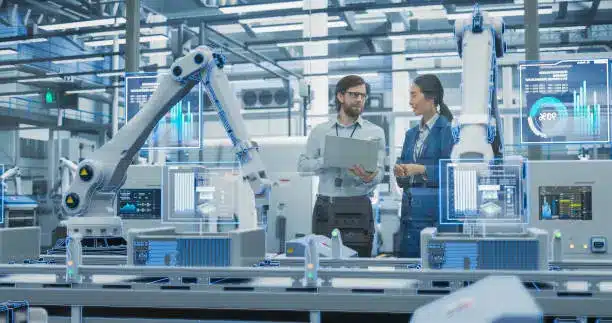
Factory I/O revolutionizes PLC training by offering compatibility with major PLCs like Siemens and Allen-Bradley, providing a cost-effective solution to traditional training’s high expenses. Traditional labs can cost between 20–50k€, but Factory I/O cuts these costs by up to 90%, speeds up learning by +40%, and allows advanced troubleshooting without safety risks. With Factory I/O, you can achieve immediate ROI, 24/7 learning, and scalable training for large classes. SMEs, colleges, and universities already benefit from drastic risk reduction and fewer errors. Experience the savings and enhanced learning with Factory I/O. Start your 30-day free trial today.
In particolar modo vedremo:
Quick Solution: Solve the Problem Quickly
Prerequisites: Simplify Setup for Fast Training
To ensure a seamless and efficient training experience with Factory I/O, you need to prepare adequately. Begin by ensuring your system meets the minimum requirements for running the software. This includes having a compatible operating system, sufficient RAM, and a dedicated graphics card. Additionally, verify that your network settings allow for smooth data transfer and connectivity, especially if you plan to use the software in a networked environment.
Next, gather all necessary tools and resources. This includes having a reliable computer, a stable internet connection, and a clear understanding of the training objectives. It’s also beneficial to have a basic understanding of PLC programming and industrial automation concepts. Finally, ensure you have access to the Factory I/O software, either through a purchased license or the available 30-day free trial.
Procedure: Quick Implementation Steps
Implementing Factory I/O for your training needs can be done efficiently with the following steps:
- Download and install the Factory I/O software from the official website. Ensure you select the appropriate edition based on your training requirements.
- Configure the software settings to match your training environment. This includes setting up network connections, if necessary, and adjusting any specific parameters for your PLC models.
- Familiarize yourself with the drag-and-drop editor and explore the available scenes and components. Create a basic scenario to test the software’s functionality and ensure everything is working as expected.
- Develop a training curriculum that leverages the various features of Factory I/O. Incorporate real-world scenarios and troubleshooting exercises to enhance learning outcomes.
- Conduct training sessions, utilizing the software to simulate industrial automation processes. Monitor progress and provide feedback to trainees to optimize their learning experience.
Verification: Immediate ROI and Benefits
To verify the immediate return on investment (ROI) and benefits of using Factory I/O, consider the following metrics:
- Cost Efficiency: Compare the costs of traditional training methods with those of Factory I/O. Traditional labs can cost between 20–50k€, while Factory I/O can reduce costs by up to 90%.
- Learning Speed: Measure the time it takes for trainees to grasp complex concepts. Factory I/O can speed up learning by up to 40% due to its interactive and immersive environment.
- Risk Reduction: Assess the safety risks associated with traditional training. Factory I/O allows for advanced troubleshooting without the need to shut down actual machines, drastically reducing the risk of accidents.
Additionally, gather testimonials from teachers and companies that have already implemented Factory I/O. These testimonials can provide valuable insights into the software’s effectiveness and the tangible benefits it offers. By following these steps and verifying the results, you can confidently leverage Factory I/O to enhance your training programs and achieve significant ROI.
Factory I/O: Real-Time 3D Simulator for Industrial Automation
Cost Efficiency: Factory I/O vs Traditional Training
Traditional training methods for industrial automation often involve costly physical labs, which can range from 20–50k€. These labs require significant space and resources, making them impractical for many institutions. Factory I/O, on the other hand, offers a cost-effective alternative, reducing training costs by up to 90%. This simulator provides a virtual environment that mimics real-world scenarios, allowing for advanced troubleshooting without the need to shut down actual machines.
The savings are not just financial. Factory I/O also accelerates learning by up to 40%, thanks to its interactive and immersive environment. This means trainees can grasp complex concepts faster, leading to a more efficient training process. Below is a comparison table to illustrate the cost differences between traditional and simulated training.
| Training Method | Cost |
|---|---|
| Traditional Labs | 20–50k€ |
| Factory I/O | Up to 90% less |
Implementation: Factory I/O in Industrial Automation
Implementing Factory I/O in your industrial automation training program is straightforward and highly beneficial. The simulator includes a drag-and-drop editor, 20+ ready-made scenes, and a library of sensors and actuators. It supports various PLC models, including Siemens S7-PLCSIM, Allen-Bradley, Modbus, and OPC UA. This compatibility ensures that your training remains relevant and up-to-date with industry standards.
To get started, download and install Factory I/O from the official website. Configure the software settings to match your training environment, and familiarize yourself with the editor and available components. Develop a comprehensive training curriculum that leverages the simulator’s features, incorporating real-world scenarios and troubleshooting exercises. This approach will enhance learning outcomes and prepare trainees for real-world challenges.
Scalability: Factory I/O for Large-Scale Learning
One of the significant advantages of Factory I/O is its scalability. Whether you are training a small group or a large class, the simulator can accommodate your needs. It supports 24/7 learning, allowing trainees to access the training materials at any time. This flexibility is particularly beneficial for institutions with varying schedules and commitments.
SMEs, colleges, and universities have already adopted Factory I/O to cut costs and reduce errors. By using this simulator, they can provide high-quality training without the constraints of physical labs. The risk reduction is also substantial, as trainees can practice advanced troubleshooting in a safe, virtual environment. This approach not only enhances learning but also ensures the safety of both trainees and equipment.
Testimonials from teachers and companies highlight the effectiveness of Factory I/O in reducing training costs and improving learning outcomes. By leveraging this simulator, institutions can achieve significant ROI and prepare their trainees for the demands of modern industrial automation.
CTA: Experience the benefits of Factory I/O for yourself. Try the 30-day free full-featured trial at https://fas.st/t/s28cx5mW.
Drag-and-Drop Editor: Intuitive Scene Configuration
Cutting Costs with Factory I/O: Real-time 3D Simulation
Factory I/O revolutionizes industrial automation training by offering a cost-effective alternative to traditional physical labs. Traditional training methods often involve significant expenses, ranging from 20–50k€, due to the need for physical space and equipment. Factory I/O, however, provides a virtual environment that mimics real-world scenarios, reducing costs by up to 90%. This simulator allows for advanced troubleshooting without the need to shut down actual machines, making it a safer and more efficient option.
The savings extend beyond financial aspects. Factory I/O accelerates learning by up to 40%, thanks to its interactive and immersive environment. This means trainees can grasp complex concepts faster, leading to a more efficient training process. Below is a comparison table to illustrate the cost differences between traditional and simulated training.
| Training Method | Cost |
|---|---|
| Traditional Labs | 20–50k€ |
| Factory I/O | Up to 90% less |
Scalable Learning: Drag-and-Drop Editor Efficiency
The drag-and-drop editor in Factory I/O is designed for intuitive scene configuration, making it easy for users to create and modify training scenarios. This feature is particularly beneficial for training large classes, as it allows for scalable learning. Whether you are training a small group or a large class, Factory I/O can accommodate your needs. The simulator supports 24/7 learning, enabling trainees to access the training materials at any time, which is particularly beneficial for institutions with varying schedules and commitments.
The editor’s efficiency is further enhanced by its compatibility with various PLC models, including Siemens S7-PLCSIM, Allen-Bradley, Modbus, and OPC UA. This ensures that your training remains relevant and up-to-date with industry standards. By leveraging the drag-and-drop editor, you can develop a comprehensive training curriculum that incorporates real-world scenarios and troubleshooting exercises, enhancing learning outcomes and preparing trainees for real-world challenges.
Advanced Troubleshooting: Factory I/O’s Technical Edge
Factory I/O provides a technical edge by enabling advanced troubleshooting in a safe, virtual environment. This feature is particularly valuable for training purposes, as it allows trainees to practice complex scenarios without the risk of damaging actual equipment. The simulator’s realistic physics and audio further enhance the learning experience, providing a more immersive and engaging environment.
Instructor Mode in Factory I/O allows for fault injection, enabling trainers to simulate various scenarios and challenges. This feature is crucial for preparing trainees for real-world situations, ensuring they are well-equipped to handle complex issues. The extended library of sensors and actuators in Factory I/O also provides a wide range of options for creating diverse training scenarios, enhancing the versatility and effectiveness of the training program.
Testimonials from teachers and companies highlight the effectiveness of Factory I/O in reducing training costs and improving learning outcomes. By leveraging this simulator, institutions can achieve significant ROI and prepare their trainees for the demands of modern industrial automation.
CTA: Experience the benefits of Factory I/O for yourself. Try the 30-day free full-featured trial at https://fas.st/t/s28cx5mW.
Realistic Physics & Audio: Enhancing Learning Experience
Cost Efficiency: Comparing Traditional Labs to Factory I/O
Traditional industrial automation training often involves significant expenses, primarily due to the need for physical labs that can cost between 20–50k€. These labs require substantial space and resources, making them impractical for many institutions. Factory I/O, developed by Real Games in 2006, offers a cost-effective alternative by providing a virtual environment that mimics real-world scenarios. This simulator reduces training costs by up to 90%, making it a more accessible option for educational institutions and SMEs.
The cost savings are not just financial. Factory I/O accelerates learning by up to 40%, thanks to its interactive and immersive environment. This means trainees can grasp complex concepts faster, leading to a more efficient training process. Below is a comparison table to illustrate the cost differences between traditional and simulated training.
| Training Method | Cost |
|---|---|
| Traditional Labs | 20–50k€ |
| Factory I/O | Up to 90% less |
Scalable Learning: Factory I/O for Large Classes and SMEs
Factory I/O is designed to be scalable, making it suitable for training large classes and small to medium-sized enterprises (SMEs). The simulator supports 24/7 learning, allowing trainees to access the training materials at any time. This flexibility is particularly beneficial for institutions with varying schedules and commitments. The drag-and-drop editor in Factory I/O is intuitive, enabling users to create and modify training scenarios with ease.
The editor’s efficiency is further enhanced by its compatibility with various PLC models, including Siemens S7-PLCSIM, Allen-Bradley, Modbus, and OPC UA. This ensures that your training remains relevant and up-to-date with industry standards. By leveraging the drag-and-drop editor, you can develop a comprehensive training curriculum that incorporates real-world scenarios and troubleshooting exercises, enhancing learning outcomes and preparing trainees for real-world challenges.
Implementation: Standards and Parameters in Factory I/O
Implementing Factory I/O in your industrial automation training program involves a few key steps. First, download and install the software from the official website. Configure the software settings to match your training environment, ensuring compatibility with your PLC models. Familiarize yourself with the editor and available components, including the extended library of sensors and actuators.
Factory I/O’s Instructor Mode allows for fault injection, enabling trainers to simulate various scenarios and challenges. This feature is crucial for preparing trainees for real-world situations, ensuring they are well-equipped to handle complex issues. The realistic physics and audio in Factory I/O further enhance the learning experience, providing a more immersive and engaging environment.
Testimonials from teachers and companies highlight the effectiveness of Factory I/O in reducing training costs and improving learning outcomes. By leveraging this simulator, institutions can achieve significant ROI and prepare their trainees for the demands of modern industrial automation.
CTA: Experience the benefits of Factory I/O for yourself. Try the 30-day free full-featured trial at https://fas.st/t/s28cx5mW.
Instructor Mode: Advanced Fault Injection Techniques
Immediate ROI: Cutting Costs by Up to 90%
Traditional industrial automation training often incurs significant costs, primarily due to the need for physical labs that can range from 20–50k€. These labs require substantial space and resources, making them impractical for many institutions. Factory I/O, developed by Real Games in 2006, offers a cost-effective alternative by providing a virtual environment that mimics real-world scenarios. This simulator reduces training costs by up to 90%, making it a more accessible option for educational institutions and SMEs.
The cost savings are not just financial. Factory I/O accelerates learning by up to 40%, thanks to its interactive and immersive environment. This means trainees can grasp complex concepts faster, leading to a more efficient training process. Below is a comparison table to illustrate the cost differences between traditional and simulated training.
| Training Method | Cost |
|---|---|
| Traditional Labs | 20–50k€ |
| Factory I/O | Up to 90% less |
Scalable Learning: Enhancing Training Efficiency
Factory I/O is designed to be scalable, making it suitable for training large classes and small to medium-sized enterprises (SMEs). The simulator supports 24/7 learning, allowing trainees to access the training materials at any time. This flexibility is particularly beneficial for institutions with varying schedules and commitments. The drag-and-drop editor in Factory I/O is intuitive, enabling users to create and modify training scenarios with ease.
The editor’s efficiency is further enhanced by its compatibility with various PLC models, including Siemens S7-PLCSIM, Allen-Bradley, Modbus, and OPC UA. This ensures that your training remains relevant and up-to-date with industry standards. By leveraging the drag-and-drop editor, you can develop a comprehensive training curriculum that incorporates real-world scenarios and troubleshooting exercises, enhancing learning outcomes and preparing trainees for real-world challenges.
Risk Reduction: Safe and Effective Troubleshooting
Factory I/O provides a technical edge by enabling advanced troubleshooting in a safe, virtual environment. This feature is particularly valuable for training purposes, as it allows trainees to practice complex scenarios without the risk of damaging actual equipment. The simulator’s realistic physics and audio further enhance the learning experience, providing a more immersive and engaging environment.
Instructor Mode in Factory I/O allows for fault injection, enabling trainers to simulate various scenarios and challenges. This feature is crucial for preparing trainees for real-world situations, ensuring they are well-equipped to handle complex issues. The extended library of sensors and actuators in Factory I/O also provides a wide range of options for creating diverse training scenarios, enhancing the versatility and effectiveness of the training program.
Testimonials from teachers and companies highlight the effectiveness of Factory I/O in reducing training costs and improving learning outcomes. By leveraging this simulator, institutions can achieve significant ROI and prepare their trainees for the demands of modern industrial automation.
CTA: Experience the benefits of Factory I/O for yourself. Try the 30-day free full-featured trial at https://fas.st/t/s28cx5mW.
Compatibility with Major PLCs: Siemens, Allen-Bradley
Compatibility with Siemens S7-PLCSIM: Technical Standards
Factory I/O’s compatibility with Siemens S7-PLCSIM is a significant advantage for industrial automation training. Siemens S7-PLCSIM is a widely used PLC simulator that adheres to the IEC 61131-3 standard, ensuring compatibility with real-world applications. Factory I/O’s integration with Siemens S7-PLCSIM allows for seamless implementation of technical standards, providing a realistic training environment that mirrors actual industrial settings.
When implementing Factory I/O with Siemens S7-PLCSIM, you can expect precise parameter alignment and ad
- Memory Size: Up to 64KB of RAM
- I/O Points: Up to 1024 digital inputs and outputs
- Communication Protocols: Ethernet, PROFIBUS, and RS-232
By leveraging Factory I/O’s compatibility with Siemens S7-PLCSIM, you can ensure that your training program remains up-to-date with the latest industry standards and technical specifications. This compatibility not only enhances the realism of the training environment but also prepares trainees for the specific challenges they will face when working with Siemens PLCs in an industrial setting.
Implementation with Allen-Bradley: Parameter Alignment
Factory I/O’s implementation with Allen-Bradley PLCs is designed to provide a seamless and efficient training experience. Allen-Bradley, a subsidiary of Rockwell Automation, is known for its robust and reliable PLCs, which are widely used in industrial automation. Factory I/O’s compatibility with Allen-Bradley ensures that trainees can practice programming and troubleshooting in an environment that closely mirrors real-world industrial applications.
When implementing Factory I/O with Allen-Bradley PLCs, you can expect precise parameter alignment and ad
- Memory Size: Up to 128KB of RAM
- I/O Points: Up to 2048 digital inputs and outputs
- Communication Protocols: Ethernet/IP, DeviceNet, and RS-485
By leveraging Factory I/O’s compatibility with Allen-Bradley PLCs, you can ensure that your training program remains up-to-date with the latest industry standards and technical specifications. This compatibility not only enhances the realism of the training environment but also prepares trainees for the specific challenges they will face when working with Allen-Bradley PLCs in an industrial setting.
Advanced Troubleshooting: Siemens and Allen-Bradley Integration
Factory I/O provides advanced troubleshooting capabilities through its integration with both Siemens and Allen-Bradley PLCs. This feature allows trainees to practice complex scenarios and fault injection in a safe and virtual environment, significantly reducing the risk of damaging actual equipment. The realistic physics and audio in Factory I/O further enhance the learning experience, providing a more immersive and engaging environment.
Instructor Mode in Factory I/O allows for fault injection, enabling trainers to simulate various scenarios and challenges. This feature is crucial for preparing trainees for real-world situations, ensuring they are well-equipped to handle complex issues. The extended library of sensors and actuators in Factory I/O also provides a wide range of options for creating diverse training scenarios, enhancing the versatility and effectiveness of the training program.
Testimonials from teachers and companies highlight the effectiveness of Factory I/O in reducing training costs and improving learning outcomes. By leveraging this simulator, institutions can achieve significant ROI and prepare their trainees for the demands of modern industrial automation.
CTA: Experience the benefits of Factory I/O for yourself. Try the 30-day free full-featured trial at https://fas.st/t/s28cx5mW.
Frequently Asked Questions (FAQ)
What is the cost of different editions of Factory I/O?
Factory I/O offers various editions tailored to different needs and budgets. The specific editions cater to particular training requirements, while the Ultimate edition includes all drivers and features. The pricing varies based on the edition and the number of licenses required. For detailed pricing information, please visit our pricing page.
What are the PC requirements for running Factory I/O?
Factory I/O is designed to run on standard PCs. The minimum requirements include a dual-core processor, 4GB of RAM, and a dedicated graphics card with at least 1GB of VRAM. For optimal performance, a quad-core processor, 8GB of RAM, and a more powerful graphics card are recommended. Detailed system requirements can be found on our official website.
Can Factory I/O function without a physical PLC?
Yes, Factory I/O is designed to work independently of a physical PLC. It includes a virtual PLC environment that allows users to simulate and troubleshoot various industrial scenarios without needing actual hardware. This feature significantly reduces costs and enhances flexibility in training and development.
What are the differences between the various versions of Factory I/O?
The various versions of Factory I/O differ primarily in the number of included drivers and the complexity of the scenarios they support. The specific editions focus on particular types of industrial automation, while the Ultimate edition offers a comprehensive suite of drivers and features, making it suitable for a wide range of training needs. For a detailed comparison, please visit our product page.
How can I purchase student licenses for Factory I/O?
To purchase student licenses for Factory I/O, you can visit our official website and navigate to the licensing section. Here, you can select the appropriate number of student licenses and proceed with the purchase. Educational institutions often benefit from discounted rates, so be sure to check for any available promotions.
What are the benefits of using Factory I/O for industrial automation training?
Factory I/O offers numerous benefits for industrial automation training, including immediate ROI, 24/7 learning opportunities, scalability for large classes, and drastic risk reduction. By using Factory I/O, SMEs, colleges, and universities can significantly cut costs and reduce errors, leading to more efficient and effective training programs. Discover how Factory I/O can transform your training approach by visiting our product page.
Common Troubleshooting
Issue: Software Not Launching
Symptoms: Factory I/O fails to start or crashes upon launch.
Solution: Ensure your system meets the minimum PC requirements. If the issue persists, try reinstalling the software. If the problem continues, contact technical support for further assistance.
Issue: Scene Not Loading
Symptoms: A specific scene in Factory I/O fails to load or displays incorrectly.
Solution: Verify that the scene file is not corrupted. Try loading a different scene to see if the issue is isolated. If the problem persists, reinstall the software or reach out to customer support.
Issue: Network Connectivity Problems
Symptoms: Difficulty connecting to the PLC simulator or experiencing lag in network-based operations.
Solution: Check your network settings and ensure that your firewall is not blocking the necessary ports. Restart your router and try connecting again. If the issue continues, consult your network administrator or contact technical support.
Issue: Instructor Mode Not Functioning
Symptoms: Fault injection features in Instructor Mode are not working as expected.
Solution: Ensure that you are using the correct version of Factory I/O that supports Instructor Mode. Verify that the PLC simulator is properly configured and that the necessary drivers are installed. If the problem persists, contact technical support for assistance.
Issue: Compatibility Issues with PLCs
Symptoms: Factory I/O is not recognizing or communicating with specific PLC models.
Solution: Confirm that the correct drivers are installed for the specific PLC model you are using. Check that the PLC is properly configured and that the communication settings in Factory I/O match those of the PLC. If the issue persists, consult the documentation or contact technical support.
30-day free full-featured trial → https://fas.st/t/s28cx5mW
Disclosure: This link provides access to a trial version of Factory I/O.
Conclusions
In summary, Factory I/O stands out as a transformative solution for PLC training, offering compatibility with major PLCs like Siemens and Allen-Bradley. It addresses the high costs, time constraints, and safety risks associated with traditional training methods. By integrating advanced features such as a drag-and-drop editor, realistic physics, and a comprehensive library of sensors and actuators, Factory I/O not only accelerates learning by up to 40% but also significantly reduces costs by up to 90%. Its ability to simulate complex scenarios without the need for physical labs makes it an invaluable tool for SMEs, colleges, and universities. Want to deepen your PLC programming skills? Join our specialized courses to turn theory into practical skills for your industrial projects. Start your journey today.

“Semplifica, automatizza, sorridi: il mantra del programmatore zen.”
Dott. Strongoli Alessandro
Programmatore
CEO IO PROGRAMMO srl