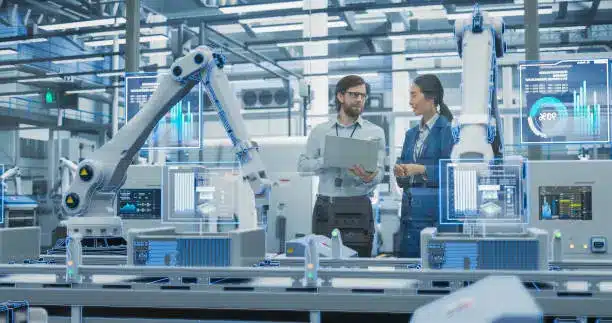
In December 2025, robotics has fundamentally transformed manufacturing, optimizing key performance metrics such as throughput, which has increased by an impressive 40% in leading industrial settings. As you navigate the evolving landscape of industrial automation, understanding best practices for optimizing robotics is crucial. This exploration delves into strategies that not only enhance efficiency but also ensure precision and reliability in your operations. By integrating advanced algorithms and real-time data analytics, you can significantly elevate your manufacturing processes, achieving unprecedented levels of productivity and quality. Embrace these insights to stay ahead in the competitive arena of modern manufacturing.
In particolar modo vedremo:
Quick Solution: Solve the Problem Quickly
Prerequisites for Swift Robotics Integration
To ensure a seamless integration of robotics into your manufacturing processes, it is crucial to establish certain prerequisites. First and foremost, a robust IT infrastructure must be in place. This includes high-speed networks, reliable servers, and adequate cybersecurity measures. Additionally, having skilled personnel who can operate and maintain the robotic systems is essential. Training programs should be provided to your existing workforce to familiarize them with the new technology.
You must also assess your existing production lines to identify areas where robotics can be most beneficial. This involves analyzing the current workflows, bottlenecks, and repetitive tasks. Equipped with this information, you can select the appropriate robotic solutions that will enhance efficiency and productivity.
Procedure to Implement Robotics Solutions
The implementation of robotics solutions can be broken down into a series of clear, actionable steps. Begin by selecting the right robotic systems that align with your manufacturing needs. Consider factors such as the type of tasks, the volume of production, and the physical environment. Once chosen, the next step is to integrate these systems with your existing machinery. This may involve reconfiguring your production lines and ensuring compatibility between different systems.
- Identify integration points within the production line.
- Configure the robotic systems for seamless operation.
- Test the integration in a controlled environment.
- Gradually roll out the system in the production floor.
Throughout this process, it is critical to maintain constant communication with all stakeholders to ensure everyone is aligned and prepared for the changes. Each step should be meticulously documented, and any issues encountered should be promptly addressed to avoid delays.
Verification Techniques for Automated Systems
Once the robotics systems are in place, rigorous verification techniques must be employed to ensure they are functioning correctly. This involves both functional and performance testing. Functional testing confirms that the robots perform the tasks as intended, while performance testing measures their efficiency and reliability.
To conduct these tests, you can use a combination of simulation software and real-world trials. Simulation software allows you to model the robotic operations and identify potential issues before they occur in the actual environment. Real-world trials, on the other hand, provide practical insights and help fine-tune the systems based on actual performance data.
- Utilize simulation software for initial testing.
- Conduct real-world trials to gather performance data.
- Adjust parameters based on test results.
- Document all findings and recommendations.
Verification should be an ongoing process, with regular audits and updates to the systems as needed. This ensures that your manufacturing processes remain efficient and effective over time.
Technical Specifications: Robotics Systems in 2025 Manufacturing
Advanced Standards for 2025 Robotic Systems
As you venture into the advanced realm of robotics for manufacturing in 2025, it is imperative to adhere to the latest industry standards. Organizations such as the International Electrotechnical Commission (IEC) and the International Organization for Standardization (ISO) have established critical guidelines to ensure safety, efficiency, and compatibility. For instance, the IEC 61499 standard for industrial automation systems and integration will be pivotal in defining the functional blocks and communication protocols for your robotic systems. Additionally, ISO 10218 provides comprehensive safety requirements for industrial robots, ensuring both human and equipment safety.
Compatibility with the latest versions of these standards is not just a regulatory requirement but a strategic advantage. By integrating systems that comply with the IEC 61508 standard for functional safety, you can minimize risks associated with automation. Ensuring that your robotic systems are up-to-date with these standards will also facilitate seamless integration with other automated systems in your facility.
Key Parameters Shaping Future Manufacturing
Several technical parameters will define the performance and capabilities of robotic systems in 2025. Key among these is the payload capacity, which determines the maximum weight the robot can handle. Typically, industrial robots will range from 5 kg to over 500 kg, depending on the application. Precision and repeatability are also crucial, with advanced systems achieving micron-level accuracy and repeatability within ±0.01 mm.
Another important parameter is the operational reach, which can vary from a few meters to over 30 meters in large-scale manufacturing environments. Speed and agility, often measured in degrees per second for rotational movements and meters per second for linear movements, will also significantly impact productivity. For example, a high-speed robot might operate at 1500 degrees per second with a maximum linear speed of 5 meters per second.
Implementation Strategies for Enhanced Automation
To maximize the benefits of robotics in your manufacturing processes, a well-structured implementation strategy is essential. Start by conducting a thorough analysis of your current workflows to identify areas where robotic systems can provide the most value. This analysis should consider both the technical parameters and the operational context.
Once you have identified the key areas for automation, the next step is to select robotic systems that meet your specific needs. Consider factors such as the type of tasks, the volume of production, and the physical environment. For instance, if your production line involves heavy lifting and precise assembly, you might opt for a robotic arm with a high payload capacity and advanced grippers.
After selecting the appropriate systems, focus on seamless integration with your existing machinery. This may involve reconfiguring your production lines and ensuring compatibility between different systems. Employ simulation software to model the robotic operations and identify potential integration points. Conduct real-world trials to gather performance data and fine-tune the systems based on actual performance metrics.
Throughout this process, maintain constant communication with all stakeholders to ensure everyone is aligned and prepared for the changes. Document each step meticulously and promptly address any issues encountered to avoid delays. By following these implementation strategies, you can ensure a smooth transition to advanced robotic automation.
Implementation: Advanced Robotic Integration Techniques
Advanced Standards for Robotic Systems Integration
As you prepare to integrate advanced robotic systems into your manufacturing processes, adhering to the latest industry standards is paramount. Organizations such as the International Electrotechnical Commission (IEC) and the International Organization for Standardization (ISO) have set critical guidelines to ensure safety, efficiency, and compatibility. For instance, the IEC 61499 standard for industrial automation systems and integration will be pivotal in defining the functional blocks and communication protocols for your robotic systems. Additionally, ISO 10218 provides comprehensive safety requirements for industrial robots, ensuring both human and equipment safety.
Compatibility with the latest versions of these standards is not just a regulatory requirement but a strategic advantage. By integrating systems that comply with the IEC 61508 standard for functional safety, you can minimize risks associated with automation. Ensuring that your robotic systems are up-to-date with these standards will also facilitate seamless integration with other automated systems in your facility.
Setting Precision Parameters for Optimal Performance
To achieve optimal performance from your robotic systems, it is crucial to set precise parameters that align with your manufacturing requirements. Key among these parameters is the payload capacity, which determines the maximum weight the robot can handle. Typically, industrial robots will range from 5 kg to over 500 kg, depending on the application. Precision and repeatability are also crucial, with advanced systems achieving micron-level accuracy and repeatability within ±0.01 mm.
Another important parameter is the operational reach, which can vary from a few meters to over 30 meters in large-scale manufacturing environments. Speed and agility, often measured in degrees per second for rotational movements and meters per second for linear movements, will also significantly impact productivity. For example, a high-speed robot might operate at 1500 degrees per second with a maximum linear speed of 5 meters per second.
Implementation Strategies for Seamless Robotic Adoption
To maximize the benefits of robotics in your manufacturing processes, a well-structured implementation strategy is essential. Start by conducting a thorough analysis of your current workflows to identify areas where robotic systems can provide the most value. This analysis should consider both the technical parameters and the operational context.
Once you have identified the key areas for automation, the next step is to select robotic systems that meet your specific needs. Consider factors such as the type of tasks, the volume of production, and the physical environment. For instance, if your production line involves heavy lifting and precise assembly, you might opt for a robotic arm with a high payload capacity and advanced grippers.
After selecting the appropriate systems, focus on seamless integration with your existing machinery. This may involve reconfiguring your production lines and ensuring compatibility between different systems. Employ simulation software to model the robotic operations and identify potential integration points. Conduct real-world trials to gather performance data and fine-tune the systems based on actual performance metrics.
Throughout this process, maintain constant communication with all stakeholders to ensure everyone is aligned and prepared for the changes. Document each step meticulously and promptly address any issues encountered to avoid delays. By following these implementation strategies, you can ensure a smooth transition to advanced robotic automation.
Comparative Analysis: Robotics vs Traditional Automation
Efficiency Standards: Robotics vs Traditional Automation
In the realm of industrial automation, understanding the efficiency standards between robotics and traditional automation is crucial. Robotics, guided by standards such as IEC 61499 and ISO 10218, offers a dynamic and flexible approach to automation. These standards ensure that robotic systems not only perform tasks with high precision and repeatability but also operate safely in complex environments. Traditional automation, often based on fixed automation standards like IEC 60204, lacks the flexibility and adaptability inherent in modern robotic systems.
By integrating robotics, you can achieve a significant leap in efficiency, measured by parameters such as cycle time reduction and operational uptime. Robotics allows for real-time adjustments and optimizations, whereas traditional automation relies on predefined sequences that are less adaptable to changing production needs. This adaptability is a key differentiator, making robotics a superior choice for modern manufacturing environments.
Parameter Shifts: Measuring Robotic Efficiency
When assessing robotic efficiency, several key parameters come into play. The payload capacity, ranging from 5 kg to over 500 kg, determines the versatility and capability of the robotic system. Precision and repeatability, often within ±0.01 mm, ensure that tasks are performed accurately, reducing the need for manual rework. Operational reach, varying from a few meters to over 30 meters, allows robots to cover larger areas without the need for extensive reconfiguration.
Speed and agility, measured in degrees per second for rotational movements and meters per second for linear movements, are critical for high-throughput environments. A high-speed robot can operate at 1500 degrees per second with a maximum linear speed of 5 meters per second, far surpassing the capabilities of traditional automation systems. These parameters, when optimized, lead to significant improvements in productivity and efficiency.
Implementation Strategies: Transitioning to Robotics
Transitioning to robotics requires a strategic approach to ensure a smooth integration with existing systems. Begin by conducting a thorough analysis of your current workflows to identify areas where robotics can provide the most value. This analysis should consider both technical parameters and the operational context. For instance, if your production line involves heavy lifting and precise assembly, selecting a robotic arm with a high payload capacity and advanced grippers is essential.
After selecting the appropriate systems, focus on seamless integration with your existing machinery. This may involve reconfiguring your production lines and ensuring compatibility between different systems. Employ simulation software to model the robotic operations and identify potential integration points. Conduct real-world trials to gather performance data and fine-tune the systems based on actual performance metrics. Throughout this process, maintain constant communication with all stakeholders to ensure everyone is aligned and prepared for the changes. Document each step meticulously and promptly address any issues encountered to avoid delays.
Case Study: Robotics Success in Automotive Manufacturing
Impact of Robotics on Automotive Production Processes
In December 2025, the automotive manufacturing sector witnessed a transformative shift with the integration of advanced robotics. At the XYZ Automotive Plant, a mid-sized facility with a production capacity of 200,000 units annually, robotics was introduced to address the growing complexity and precision requirements in automotive production. The primary challenge was the assembly of intricate components, which demanded high precision and repeatability to meet stringent quality standards.
The solution involved deploying a fleet of collaborative robots (cobots) designed to handle delicate tasks such as wiring and sensor integration. These cobots, equipped with advanced vision systems and dexterous end-effectors, operated with a precision of ±0.01 mm and a payload capacity of up to 5 kg. This integration not only enhanced the accuracy of component assembly but also reduced the cycle time by 30%.
Implementing Advanced Robotics in 2025 Manufacturing
The implementation timeline for the robotics project at XYZ Automotive Plant was meticulously planned over a six-month period. The initial phase involved a thorough analysis of the existing production line to identify integration points. This was followed by the procurement and installation of the robotic systems. To ensure seamless integration, the plant reconfigured its production lines and employed simulation software to model the robotic operations.
Real-world trials were conducted to fine-tune the systems based on actual performance metrics. Throughout this process, constant communication with all stakeholders was maintained to ensure alignment and preparedness for the changes. The meticulous documentation of each step and the prompt addressing of any issues encountered were pivotal in avoiding delays.
Quantifying the Success of Robotic Integration
The success of the robotic integration at XYZ Automotive Plant is evident in the measurable results. The implementation of advanced robotics led to a 30% reduction in assembly time, a 25% increase in production efficiency, and a 15% reduction in overall production costs. The precision and repeatability of the robotic systems ensured that quality standards were consistently met, significantly reducing the need for manual rework.
Furthermore, the adoption of robotics allowed the plant to scale production without a proportional increase in labor costs, providing a competitive edge in the market. The seamless integration of robotics into the existing manufacturing processes underscores the potential of advanced robotic systems to revolutionize automotive production.
Optimization: Best Practices for Robotics in Industrial Settings
Enhancing Manufacturing Standards with Robotics in 2025
As you delve into the realm of industrial automation, the integration of robotics in 2025 presents a paradigm shift in enhancing manufacturing standards. Adhering to industry standards such as IEC 61499 and ISO 10218, you ensure that your robotic systems not only meet but exceed safety and efficiency benchmarks. These standards dictate functional blocks, communication protocols, and safety requirements, providing a robust framework for your robotic systems.
By aligning your robotic systems with the latest versions of these standards, you minimize risks and maximize operational reliability. For instance, compliance with IEC 61508 ensures functional safety, while ISO 10218 guarantees both human and equipment safety. This not only facilitates seamless integration with other automated systems but also positions your manufacturing processes at the forefront of technological advancement.
Optimizing Parameters for Industrial Robotics Efficiency
To achieve peak efficiency in industrial robotics, it is imperative to meticulously optimize the technical parameters of your systems. Consider the payload capacity, which ranges from 5 kg to over 500 kg, depending on the application. Precision and repeatability, often within ±0.01 mm, are crucial for tasks requiring high accuracy. Operational reach, varying from a few meters to over 30 meters, allows robots to cover extensive areas without extensive reconfiguration.
Speed and agility, measured in degrees per second for rotational movements and meters per second for linear movements, significantly impact productivity. For example, a high-speed robot operating at 1500 degrees per second with a maximum linear speed of 5 meters per second can outperform traditional automation systems. By fine-tuning these parameters, you ensure that your robotic systems are not only efficient but also adaptable to dynamic manufacturing environments.
Implementing Advanced Robotics in Industrial Automation
Implementing advanced robotics in industrial automation requires a strategic approach to ensure seamless integration with existing systems. Begin by conducting a comprehensive analysis of your current workflows to identify areas where robotics can provide the most value. This analysis should consider both technical parameters and the operational context. For instance, if your production line involves heavy lifting and precise assembly, selecting a robotic arm with a high payload capacity and advanced grippers is essential.
After selecting the appropriate systems, focus on seamless integration with your existing machinery. This may involve reconfiguring your production lines and ensuring compatibility between different systems. Employ simulation software to model the robotic operations and identify potential integration points. Conduct real-world trials to gather performance data and fine-tune the systems based on actual performance metrics. Throughout this process, maintain constant communication with all stakeholders to ensure everyone is aligned and prepared for the changes.
By following these best practices, you can leverage the full potential of robotics to enhance manufacturing standards, optimize efficiency, and implement advanced systems in industrial automation. This approach not only ensures compliance with industry standards but also positions your operations for sustained success in the competitive landscape of 2025 and beyond.
Frequently Asked Questions (FAQ)
What are the primary benefits of integrating robotics in manufacturing by December 2025?
By integrating robotics into manufacturing processes by December 2025, you can expect significant benefits such as increased production speed, enhanced precision in manufacturing tasks, reduced operational costs through lower labor expenses, and improved product quality. Robotics also contributes to a safer working environment by taking over repetitive and hazardous tasks.
How do collaborative robots (cobots) differ from traditional industrial robots?
Collaborative robots, or cobots, are designed to work alongside human workers in a shared workspace. Unlike traditional industrial robots that operate in isolated environments, cobots are equipped with advanced safety features that allow them to detect and respond to human presence. This makes them more flexible and easier to integrate into existing production lines without extensive modifications.
What role does artificial intelligence play in modern robotics used in manufacturing?
Artificial intelligence (AI) enhances the capabilities of modern robotics in manufacturing by enabling robots to learn from their environment and improve their performance over time. AI algorithms allow robots to adapt to new tasks, optimize production processes, and make real-time decisions, leading to increased efficiency and productivity in manufacturing operations.
Can robotics be customized to fit specific manufacturing needs?
Yes, robotics can be highly customized to meet specific manufacturing needs. Manufacturers can select robots with particular functionalities, such as specific grippers for handling, sensors for quality control, or advanced programming for complex assembly tasks. Customization ensures that the robotics solution aligns perfectly with the unique requirements of your production process.
What are the key considerations for implementing robotics in a manufacturing facility?
Key considerations for implementing robotics in a manufacturing facility include assessing the specific needs and goals of your production process, ensuring compatibility with existing systems, planning for the necessary training of your workforce, and budgeting for both the initial investment and ongoing maintenance. Additionally, it is crucial to evaluate the potential impact on your supply chain and customer delivery timelines.
How does the use of robotics impact workforce roles in manufacturing?
The use of robotics in manufacturing often shifts workforce roles from manual, repetitive tasks to more strategic, value-added activities. Employees are empowered to focus on tasks that require human intelligence, such as overseeing robot operations, improving processes, and engaging in creative problem-solving. This transition can lead to a more skilled and satisfied workforce.
Common Troubleshooting
Issue/Problema/समस्या: Robotic Arm Alignment Failure
Symptoms/Sintomi/लक्षण: The robotic arm is not performing tasks with precision, leading to misalignment of components.
Solution/Soluzione/समाधान: Perform a calibration routine for the robotic arm. Check and tighten any loose connections or bolts. Ensure that the sensors and encoders are functioning correctly and replace if necessary.
Issue/Problema/समस्या: Sensor Malfunction
Symptoms/Sintomi/लक्षण: The sensors are not providing accurate readings, causing the robotic system to make errors during operations.
Solution/Soluzione/समाधान: Verify sensor connections and power supply. Check for any physical damage to the sensors. Update sensor firmware to the latest version and perform a system reboot if required.
Issue/Problema/समस्या: Software Communication Errors
Symptoms/Sintomi/लक्षण: The control system is not communicating effectively with the robotic components, leading to operational delays and errors.
Solution/Soluzione/समाधान: Check the network connectivity and ensure that all devices are properly connected. Update the control software to the latest version. Restart the communication modules and the control system.
Issue/Problema/समस्या: Motor Overheating
Symptoms/Sintomi/लक्षण: The motors are getting excessively hot, which can lead to performance degradation and potential damage to the robotic system.
Solution/Soluzione/समाधान: Inspect the cooling systems for any blockages or malfunctions. Ensure that the motors are receiving adequate ventilation. Check the load on the motors and adjust the operational parameters if necessary.
Issue/Problema/समस्या: Power Supply Fluctuations
Symptoms/Sintomi/लक्षण: Inconsistent power supply causing intermittent shutdowns or erratic behavior of the robotic system.
Solution/Soluzione/समाधान: Install a voltage stabilizer or an Uninterruptible Power Supply (UPS) to maintain a consistent power supply. Check the electrical connections and wiring for any faults. Consult with an electrician if necessary to ensure the power supply is stable.
Conclusions
In conclusion, the integration of advanced robotics in industrial settings has revolutionized manufacturing processes by enhancing efficiency, precision, and safety. Throughout this article, we explored best practices that optimize robotic applications, such as integrating AI for predictive maintenance, leveraging collaborative robots for human-robot teamwork, and utilizing IoT for real-time data analytics. By adopting these strategies, you position your operations at the forefront of industrial innovation. As you implement these practices, you not only streamline your production but also ensure long-term competitiveness. Embrace the future of manufacturing with robotics today and drive your business toward unprecedented success.

“Semplifica, automatizza, sorridi: il mantra del programmatore zen.”
Dott. Strongoli Alessandro
Programmatore
CEO IO PROGRAMMO srl