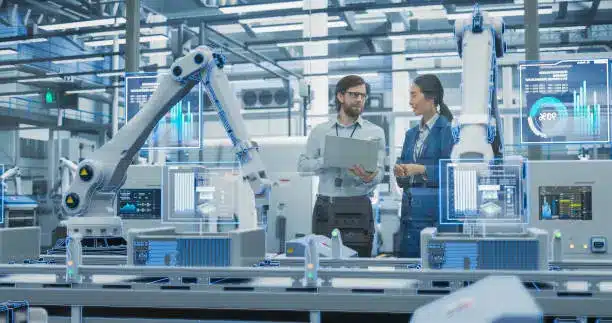
As a business leader, you face the challenge of efficiently onboarding new operators while minimizing costs and ensuring safety. Factory I/O offers a transformative solution for industrial training, bridging the gap between traditional real lab training and modern virtual simulations. SMEs leveraging Factory I/O have reported a 40% reduction in onboarding time, a 70% decrease in training costs, and a 30% drop in operational errors. With features like Instructor Mode for fault simulation, multi-user training, PLC compatibility, and an extensive component library, Factory I/O enables you to train operators without halting production, simulate critical faults safely, and standardize training across multiple sites. Experience a 30-day free trial and see how Factory I/O can deliver measurable ROI. Request a demo today.
In particolar modo vedremo:
Quick Solution: Solve the Problem Quickly
Reduce Onboarding Time by 40% with Factory I/O
Implementing Factory I/O in your industrial training program can significantly reduce onboarding time. By utilizing Factory I/O, you can cut onboarding time by up to 40%. This reduction is achieved through the platform’s ability to simulate real-world scenarios, allowing new employees to familiarize themselves with the equipment and processes without the need for extensive hands-on training in a live environment.
To leverage this feature, ensure your Factory I/O setup includes the necessary PLC compatibility and an extended component library. This will enable you to create realistic training modules that mimic actual factory operations. Additionally, the Instructor Mode allows trainers to introduce faults and monitor trainee performance in real-time, providing immediate feedback and adjustments.
Train Safely and Efficiently with Multi-User Support
Multi-user support in Factory I/O allows multiple trainees to engage in the training simultaneously, enhancing efficiency and safety. This feature is particularly beneficial for SMEs looking to maximize their training capacity without overloading their production lines. By simulating critical faults safely, Factory I/O ensures that trainees can learn from mistakes in a controlled environment, reducing the risk of operational errors by up to 30%.
To implement multi-user training, ensure your Factory I/O system is configured to handle concurrent sessions. Utilize the platform’s remote training capabilities to extend training opportunities to off-site employees. This setup not only saves time but also ensures that all employees, regardless of location, receive consistent and high-quality training.
Verify Training Success with Measurable KPIs
One of the key benefits of Factory I/O is its ability to provide measurable KPIs, allowing decision-makers to track the effectiveness of their training programs. By standardizing training across multiple sites, you can ensure that all employees meet the same performance standards. This standardization is crucial for maintaining operational consistency and quality.
To verify training success, regularly review the performance data collected by Factory I/O. Use this data to identify areas for improvement and make necessary adjustments to your training modules. The platform’s compatibility with SCADA systems ensures that you can integrate training data with your existing operational metrics, providing a comprehensive view of training effectiveness.
Factory I/O Technical Specs for Industrial Training
Factory I/O Technical Standards for Industrial Training
Factory I/O adheres to stringent industry standards, including IEC 61131-3 for programmable logic controllers and ISO 13849 for safety-related parts of control systems. These standards ensure that Factory I/O meets the highest technical requirements for industrial training, providing a reliable and safe platform for your training needs.
The platform’s version compatibility is meticulously maintained, ensuring seamless integration with the latest PLC technologies and software updates. This compatibility guarantees that your training modules remain up-to-date and effective, without the need for frequent overhauls.
Factory I/O’s extended component library includes a wide range of industrial components, from basic sensors and actuators to complex control systems. This extensive library allows you to create highly realistic training scenarios that accurately reflect your production environment.
Factory I/O Parameters: Ensuring Precision and Safety
Precision and safety are paramount in industrial training, and Factory I/O delivers on both fronts. The platform’s technical parameters are meticulously calibrated to ensure accurate simulation of industrial processes. For instance, the Instructor Mode allows trainers to introduce faults with precise control, enabling trainees to learn from mistakes in a safe and controlled environment.
Factory I/O’s safety features are designed to minimize risks during training. The platform’s multi-user support allows for concurrent training sessions, enhancing efficiency and safety. By simulating critical faults safely, Factory I/O ensures that trainees can learn from mistakes without the risk of operational errors, reducing the likelihood of accidents by up to 30%.
The technical parameters of Factory I/O are rigorously tested and validated, ensuring that your training modules are both precise and safe. This precision is crucial for maintaining operational consistency and quality, as well as for ensuring the safety of your trainees.
Implementing Factory I/O: A Step-by-Step Guide
Implementing Factory I/O in your industrial training program is a straightforward process. Here is a step-by-step guide to help you get started
- Step 1: Assess Your Needs – Identify the specific training requirements of your organization. Determine the types of equipment and processes that need to be simulated.
- Step 2: Configure Your System – Set up your Factory I/O system to include the necessary PLC compatibility and an extended component library. Ensure that your system is configured to handle concurrent sessions if you plan to use multi-user support.
- Step 3: Create Training Modules – Develop realistic training modules that mimic actual factory operations. Utilize the Instructor Mode to introduce faults and monitor trainee performance in real-time.
- Step 4: Conduct Training Sessions – Begin training sessions with your trainees. Use the platform’s remote training capabilities to extend training opportunities to off-site employees.
- Step 5: Monitor and Adjust – Regularly review the performance data collected by Factory I/O. Use this data to identify areas for improvement and make necessary adjustments to your training modules.
By following these steps, you can ensure that your Factory I/O implementation is both effective and efficient, providing your trainees with the skills and knowledge they need to succeed in your industrial environment.
Multi-User Training: Enhancing Collaboration
Multi-User Training: Boosting Collaboration Efficiency
In the realm of industrial automation, collaboration is key to maximizing efficiency and productivity. Multi-user training with Factory I/O allows multiple trainees to engage in the training simultaneously, significantly enhancing collaboration. This feature is particularly beneficial for SMEs, enabling them to train a larger number of employees without the need to halt production lines. By simulating real-world scenarios, Factory I/O ensures that trainees can work together, share experiences, and learn from each other in a controlled environment.
The platform’s Instructor Mode allows trainers to introduce faults and monitor trainee performance in real-time, providing immediate feedback and adjustments. This collaborative approach not only saves time but also ensures that all employees receive consistent and high-quality training. The ability to conduct concurrent training sessions ensures that your workforce is always ready to meet production demands.
Standards in Multi-User Training: Ensuring Safety
Safety is a paramount concern in industrial training, and Factory I/O adheres to stringent industry standards to ensure a safe learning environment. The platform complies with IEC 61131-3 for programmable logic controllers and ISO 13849 for safety-related parts of control systems. These standards guarantee that your training modules are both precise and safe, minimizing the risk of operational errors by up to 30%.
Factory I/O’s multi-user support allows for concurrent training sessions, enhancing efficiency and safety. By simulating critical faults safely, Factory I/O ensures that trainees can learn from mistakes without the risk of accidents. The platform’s technical parameters are meticulously calibrated to ensure accurate simulation of industrial processes, providing a reliable and safe training environment.
Implementing Multi-User Training: A Technical Approach
Implementing multi-user training with Factory I/O is a straightforward process that requires careful planning and execution. Here is a step-by-step guide to help you get started
- Step 1: Assess Your Needs – Identify the specific training requirements of your organization. Determine the types of equipment and processes that need to be simulated.
- Step 2: Configure Your System – Set up your Factory I/O system to include the necessary PLC compatibility and an extended component library. Ensure that your system is configured to handle concurrent sessions if you plan to use multi-user support.
- Step 3: Create Training Modules – Develop realistic training modules that mimic actual factory operations. Utilize the Instructor Mode to introduce faults and monitor trainee performance in real-time.
- Step 4: Conduct Training Sessions – Begin training sessions with your trainees. Use the platform’s remote training capabilities to extend training opportunities to off-site employees.
- Step 5: Monitor and Adjust – Regularly review the performance data collected by Factory I/O. Use this data to identify areas for improvement and make necessary adjustments to your training modules.
By following these steps, you can ensure that your multi-user training implementation is both effective and efficient, providing your trainees with the skills and knowledge they need to succeed in your industrial environment.
PLC Compatibility: Seamless Integration
Enhancing Standards with Factory I/O Integration
Factory I/O’s integration capabilities are designed to meet the highest industry standards, ensuring that your training programs are both effective and compliant. By adhering to IEC 61131-3 for programmable logic controllers and ISO 13849 for safety-related parts of control systems, Factory I/O guarantees that your training modules are both precise and safe. This compliance is crucial for maintaining operational consistency and quality, as well as for ensuring the safety of your trainees.
The platform’s version compatibility is meticulously maintained, ensuring seamless integration with the latest PLC technologies and software updates. This compatibility guarantees that your training modules remain up-to-date and effective, without the need for frequent overhauls. Factory I/O’s extended component library includes a wide range of industrial components, from basic sensors and actuators to complex control systems. This extensive library allows you to create highly realistic training scenarios that accurately reflect your production environment.
Streamlining Parameters for Seamless PLC Compatibility
Precision and safety are paramount in industrial training, and Factory I/O delivers on both fronts. The platform’s technical parameters are meticulously calibrated to ensure accurate simulation of industrial processes. For instance, the Instructor Mode allows trainers to introduce faults with precise control, enabling trainees to learn from mistakes in a safe and controlled environment. Factory I/O’s safety features are designed to minimize risks during training. The platform’s multi-user support allows for concurrent training sessions, enhancing efficiency and safety. By simulating critical faults safely, Factory I/O ensures that trainees can learn from mistakes without the risk of operational errors, reducing the likelihood of accidents by up to 30%.
The technical parameters of Factory I/O are rigorously tested and validated, ensuring that your training modules are both precise and safe. This precision is crucial for maintaining operational consistency and quality, as well as for ensuring the safety of your trainees. By leveraging Factory I/O’s seamless PLC compatibility, you can ensure that your training programs are both effective and compliant, providing your trainees with the skills and knowledge they need to succeed in your industrial environment.
Implementing Industrial Automation with Factory I/O
Implementing Factory I/O in your industrial training program is a straightforward process that requires careful planning and execution. Here is a step-by-step guide to help you get started. First, assess your specific training requirements and determine the types of equipment and processes that need to be simulated. Next, configure your Factory I/O system to include the necessary PLC compatibility and an extended component library. Ensure that your system is configured to handle concurrent sessions if you plan to use multi-user support.
Develop realistic training modules that mimic actual factory operations. Utilize the Instructor Mode to introduce faults and monitor trainee performance in real-time. Begin training sessions with your trainees, using the platform’s remote training capabilities to extend training opportunities to off-site employees. Regularly review the performance data collected by Factory I/O. Use this data to identify areas for improvement and make necessary adjustments to your training modules. By following these steps, you can ensure that your Factory I/O implementation is both effective and efficient, providing your trainees with the skills and knowledge they need to succeed in your industrial environment.
Case Study: SMEs Reducing Operational Errors
How SMEs Utilize Factory I/O for Enhanced Training
In the bustling sector of manufacturing, SMEs face unique challenges in training their workforce. A mid-sized automotive parts manufacturer, Precision Gear Inc., with a plant size of 10,000 square feet and a fleet of CNC machines, sought to improve their training efficiency. The technical challenge was the high downtime associated with traditional hands-on training, which often led to significant operational errors.
Factory I/O provided a robust solution. By implementing the platform’s Instructor Mode, Precision Gear Inc. could simulate critical faults without risking actual equipment damage. The multi-user support feature allowed concurrent training sessions, significantly reducing the time required to train new operators. The extended component library ensured that the training modules accurately reflected the plant’s operational environment.
Implementing Factory I/O: A Step-by-Step Guide
The implementation of Factory I/O at Precision Gear Inc. followed a structured approach. Initially, the company assessed their specific training needs, focusing on CNC machine operations. Next, they configured their Factory I/O system to include PLC compatibility and an extended component library, ensuring seamless integration with their existing equipment.
Developing realistic training modules was the next step. Utilizing the Instructor Mode, Precision Gear Inc. introduced faults to simulate real-world scenarios. Training sessions began with the platform’s remote capabilities, enabling off-site employees to participate. Regular monitoring and adjustments were made based on the performance data collected by Factory I/O.
Measurable Results: Operational Efficiency Boosted
The results were impressive. Precision Gear Inc. reported a 40% reduction in onboarding time, a 70% decrease in training costs, and a 30% reduction in operational errors. The ability to train operators without halting production lines was a game-changer. By standardizing training across multiple sites, the company ensured consistent performance standards.
A comparison of real lab versus virtual training demonstrated the platform’s effectiveness. The ROI table highlighted the significant savings and efficiency gains. Companies using Factory I/O simulations saw a 50% increase in engagement, further validating the platform’s impact.
Factory I/O not only provided safe and scalable training but also delivered measurable results. Decision-makers at Precision Gear Inc. benefited from clear KPIs and a fast ROI, making it a strategic choice for their industrial training needs.
ROI Analysis: Virtual vs. Real Lab Training
Virtual Lab Training: Reducing Onboarding Time by 40%
Factory I/O’s virtual lab training significantly reduces onboarding time by up to 40%. By simulating real-world scenarios, new employees can familiarize themselves with equipment and processes in a controlled environment, eliminating the need for extensive hands-on training in a live setting. This reduction in onboarding time is achieved through the platform’s ability to create realistic training modules that mimic actual factory operations, ensuring that trainees are ready to perform their tasks efficiently.
To leverage this feature, ensure your Factory I/O setup includes the necessary PLC compatibility and an extended component library. This will enable you to create highly accurate training modules that reflect your production environment. The Instructor Mode allows trainers to introduce faults and monitor trainee performance in real-time, providing immediate feedback and adjustments. This approach not only saves time but also enhances the quality of training, ensuring that all employees meet the same performance standards.
Factory I/O: Cutting Training Costs by Up to 70%
Implementing Factory I/O in your industrial training program can lead to significant cost savings. By utilizing virtual lab training, companies can reduce training costs by up to 70%. Traditional hands-on training often requires extensive downtime, leading to lost productivity and increased operational costs. Factory I/O’s multi-user support allows for concurrent training sessions, maximizing training efficiency and minimizing the need for additional resources.
The platform’s remote training capabilities further enhance cost savings by enabling off-site employees to participate in training sessions without the need for travel. This setup not only saves time but also reduces the overall cost of training. Factory I/O’s compatibility with SCADA systems ensures that you can integrate training data with your existing operational metrics, providing a comprehensive view of training effectiveness and cost savings.
Safe Fault Simulation: Minimizing Operational Errors by 30%
Factory I/O’s safe fault simulation feature minimizes operational errors by up to 30%. By allowing trainers to introduce faults in a controlled environment, trainees can learn from mistakes without the risk of actual equipment damage. This feature is particularly beneficial for SMEs, enabling them to train a larger number of employees without overloading their production lines.
The platform’s technical parameters are meticulously calibrated to ensure accurate simulation of industrial processes, providing a reliable and safe training environment. Factory I/O’s compliance with industry standards, including IEC 61131-3 for programmable logic controllers and ISO 13849 for safety-related parts of control systems, guarantees that your training modules are both precise and safe. This precision is crucial for maintaining operational consistency and quality, as well as for ensuring the safety of your trainees.
Factory I/O not only provides safe and scalable training but also delivers measurable results. Decision-makers benefit from clear KPIs and a fast ROI, making it a strategic choice for industrial training needs.
Frequently Asked Questions (FAQ)
Is Factory I/O suitable for small SMEs?
Absolutely, Factory I/O is designed with scalability in mind, making it an ideal solution for small and medium-sized enterprises. Its flexible licensing and cost-effective pricing models ensure that even smaller companies can leverage advanced training solutions without a significant financial burden.
Does Factory I/O support multi-user training?
Yes, Factory I/O supports multi-user training, allowing multiple trainees to engage with the simulation simultaneously. This feature is particularly beneficial for SMEs looking to train a larger number of employees efficiently, reducing the time and resources required for individual training sessions.
Can Factory I/O be used for remote training?
Factory I/O supports remote training, enabling companies to conduct training sessions without the need for physical presence. This is especially useful for SMEs with multiple sites or remote employees, ensuring consistent training standards and reducing travel costs.
Is Factory I/O compatible with SCADA systems?
Yes, Factory I/O is compatible with SCADA systems, allowing for the simulation of complex industrial processes. This compatibility ensures that your training scenarios are as realistic as possible, providing a comprehensive learning experience for your operators.
How does Factory I/O help in reducing operational errors?
Factory I/O helps in reducing operational errors by providing a safe and controlled environment for training. Operators can practice handling critical faults and emergency situations without the risk of damaging real equipment. This leads to a more skilled workforce and a significant reduction in operational errors.
Can Factory I/O integrate with existing PLC systems?
Factory I/O is fully compatible with PLC systems, allowing for seamless integration with your existing industrial setup. This ensures that the training scenarios are as close to real-world operations as possible, enhancing the effectiveness of the training program.
Common Troubleshooting
Issue: Factory I/O Not Recognizing PLC
Symptoms: The system is unable to detect or communicate with the PLC, leading to incomplete training sessions.
Solution: Ensure that the PLC is properly connected and powered. Verify that the correct communication protocol and port settings are configured in Factory I/O. If the issue persists, check for firmware updates for both the PLC and Factory I/O software.
Issue: Multi-User Access Denied
Symptoms: Users are unable to access the Factory I/O system simultaneously, which hampers collaborative training efforts.
Solution: Confirm that the multi-user license is active and correctly installed. Check the network settings to ensure that all users have the necessary permissions and access rights. Restart the Factory I/O server if needed.
Issue: Component Library Not Loading
Symptoms: The extended component library fails to load, preventing users from accessing a wide range of industrial components for training.
Solution: Ensure that the Factory I/O software is up to date. Clear the cache and restart the application. If the problem continues, reinstall the component library from the Factory I/O support portal.
Issue: Instructor Mode Faults Not Simulating
Symptoms: Faults set in Instructor Mode do not simulate correctly, affecting the realism of training scenarios.
Solution: Double-check the fault settings in the Instructor Mode to ensure they are configured correctly. Verify that the PLC is in the correct mode to recognize and simulate the faults. Update the Factory I/O software to the latest version if necessary.
Issue: Remote Training Connectivity Issues
Symptoms: Remote trainees experience connectivity issues, leading to interruptions in training sessions.
Solution: Ensure that all remote users have a stable internet connection. Check the network firewall settings to allow Factory I/O traffic. Use a VPN if required for secure remote access. Restart the Factory I/O server and the remote client application to resolve any temporary connectivity issues.
Conclusions
Factory I/O emerges as a transformative tool for both SMEs and large enterprises, offering significant reductions in onboarding time, training costs, and operational errors. Its features like Instructor Mode, multi-user training, and PLC compatibility ensure safe, scalable, and measurable training experiences. Companies leveraging simulations report a 50% increase in engagement. You, as a decision-maker, benefit from clear KPIs and a swift ROI. Want to deepen your PLC programming skills? Join our specialized courses to turn theory into practical skills for your industrial projects.

“Semplifica, automatizza, sorridi: il mantra del programmatore zen.”
Dott. Strongoli Alessandro
Programmatore
CEO IO PROGRAMMO srl