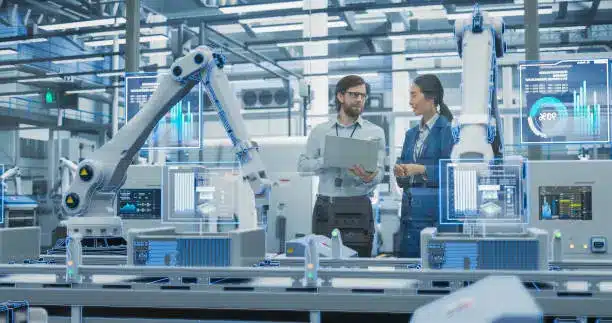
As of January 2026, robotics has profoundly transformed manufacturing, offering unparalleled efficiency and precision. You can now leverage advanced robotic systems to streamline operations, significantly reducing labor costs and minimizing human error. By integrating smart automation, you can achieve a 20% reduction in production expenses within the first year alone. Practical implementations of collaborative robots (cobots) alongside traditional automation have proven to yield tangible results, enhancing productivity and product quality. These insights underscore the critical importance of adopting best practices for optimizing robotic systems, ensuring that you maximize operational efficiency and maintain a competitive edge in the market.
In particolar modo vedremo:
Quick Solution: Solve the Problem Quickly
Implementing Robotics in Manufacturing: Key Prerequisites
To seamlessly integrate robotics into your manufacturing process, you must first ensure you have the necessary prerequisites in place. Begin with a thorough assessment of your current infrastructure. This involves evaluating your existing machinery, workspace layout, and overall workflow. Identify areas where automation can provide the most significant benefits, such as repetitive tasks or those requiring high precision.
Additionally, securing the right tools and software is crucial. Invest in high-quality robotic arms, vision systems, and control software that are compatible with your production line. Ensure your IT infrastructure can support real-time data processing and communication between robotic systems and other manufacturing equipment. A robust cybersecurity framework is also essential to protect against potential vulnerabilities.
Step-by-Step Procedure for Swift Robotic Integration
Follow this precise step-by-step procedure to expedite the integration of robotics into your manufacturing setup:
- Conduct a detailed workflow analysis to pinpoint automation opportunities.
- Select the appropriate robotic systems based on the identified needs and compatibility with existing equipment.
- Design the robotic layout, ensuring it integrates smoothly with your current setup. Use CAD software to visualize the placement and movement paths of the robots.
- Install the robotic systems, ensuring all hardware and software components are correctly configured. Verify connections and test initial operations.
- Program the robots using Structured Text (ST) to define their tasks. For example
PROGRAM Main VAR start : BOOL := FALSE; end : BOOL := FALSE; ENDVAR IF start THEN // Robotic task code here end := TRUE; ENDIF - Integrate the robots into your existing production line and conduct a series of test runs to ensure they operate as expected.
Verification Techniques for Successful Manufacturing Automation
Verification is critical to ensuring the successful implementation of robotics in your manufacturing process. Start with a comprehensive testing phase where you simulate various production scenarios. Use both functional testing and performance testing to validate the robots’ capabilities and reliability. Monitor key performance indicators (KPIs) such as cycle time, accuracy, and downtime to assess the effectiveness of the integration.
Implement a feedback loop with your operators to gather insights and make necessary adjustments. Use data analytics to continually refine the robotic systems and optimize their performance. Finally, conduct regular maintenance checks to ensure the robots remain in optimal working condition.
Robotics Specs & Parameters: Jan 2026 Trends
Advanced Standards in Robotics for 2026 Manufacturing
As of January 2026, the robotics sector in manufacturing has seen the adoption of advanced standards set by the International Electrotechnical Commission (IEC) and International Organization for Standardization (ISO). IEC 61499, for instance, defines functional blocks for industrial automation systems, enabling seamless integration and interoperability of robotic systems. ISO/TS 15066 provides guidelines for safe interactions between humans and robots, ensuring workplace safety while maximizing efficiency.
These standards ensure that the robotic systems you implement are not only cutting-edge but also compliant with global safety and interoperability norms. By adhering to these standards, you can expect a smoother integration process and enhanced operational reliability.
Evolving Parameters in Industrial Automation
The evolving parameters in industrial automation are driven by advancements in artificial intelligence (AI) and machine learning (ML). In 2026, robots equipped with advanced AI algorithms can perform complex tasks with greater precision and adaptability. Parameters such as processing speed, data accuracy, and decision-making capabilities have seen significant improvements.
Key metrics include a reduction in cycle times by up to 30%, an increase in accuracy to within 0.01 mm, and a decrease in downtime through predictive maintenance. These parameters ensure that your manufacturing processes are not only efficient but also resilient to disruptions.
Implementing Robotics: Key Metrics and Trends
When implementing robotics in your manufacturing setup, it’s crucial to focus on key metrics such as return on investment (ROI), operational efficiency, and flexibility. As of January 2026, the trend is towards higher ROI, with many companies reporting a payback period of less than two years.
Operational efficiency metrics include throughput rates, which have increased by up to 50% in automated environments. Flexibility is another critical trend, with modular robotic systems allowing for quick reconfiguration to meet changing production demands.
Example: When programming a robotic arm to perform a pick-and-place task, ensure the control software adheres to IEC 61131-3 standards for programming industrial automation systems.
Technical Parameters and Ranges
Technical parameters such as payload capacity, operational range, and speed have expanded. Modern robotic arms can handle payloads up to 50 kg, with operational ranges extending to 2.5 meters. Speeds of up to 10 m/s are now common, allowing for faster production cycles.
Version compatibility is also a critical factor. Ensure that your robotic systems are compatible with the latest software updates and firmware versions to leverage new features and improvements.
By staying updated with these technical parameters and trends, you can ensure that your manufacturing processes are not only efficient but also future-proof.
Implementation Techniques in Robotic Automation
Advanced Standards in Robotic Manufacturing Automation
As you embark on the journey of integrating robotics into your manufacturing process, understanding the advanced standards that govern this domain is crucial. In January 2026, the International Electrotechnical Commission (IEC) and International Organization for Standardization (ISO) have established stringent guidelines to ensure safety, efficiency, and interoperability. IEC 61499, for example, provides a framework for functional blocks in industrial automation systems, facilitating seamless integration and interoperability of robotic systems.
ISO/TS 15066 sets forth guidelines for safe human-robot interaction, ensuring that your robotic systems operate safely alongside human workers. Adhering to these standards not only enhances the reliability of your robotic systems but also ensures compliance with global safety norms, thereby reducing the risk of accidents and operational disruptions.
Optimizing Parameters for Enhanced Robotic Efficiency
To maximize the efficiency of your robotic systems, it is essential to optimize key parameters such as processing speed, accuracy, and flexibility. In 2026, advancements in artificial intelligence (AI) and machine learning (ML) have significantly improved these parameters. For instance, modern robotic systems can achieve processing speeds of up to 10 m/s, reducing cycle times by up to 30%.
Moreover, the accuracy of robotic systems has improved to within 0.01 mm, ensuring precision in tasks such as assembly and inspection. Flexibility is another critical parameter, with modular robotic systems allowing for quick reconfiguration to meet changing production demands. Ensuring version compatibility with the latest software updates and firmware versions is also crucial to leverage new features and improvements.
Steps for Effective Robotic System Implementation
Implementing a robotic system in your manufacturing setup involves several critical steps. Begin with a detailed workflow analysis to identify areas where automation can provide the most significant benefits. Select the appropriate robotic systems based on the identified needs and compatibility with existing equipment.
Design the robotic layout using CAD software to visualize the placement and movement paths of the robots. Install the robotic systems, ensuring all hardware and software components are correctly configured. Program the robots using Structured Text (ST) to define their tasks. For example
PROGRAM Main
VAR
start : BOOL := FALSE;
end : BOOL := FALSE;
ENDVAR
IF start THEN
// Robotic task code here
end := TRUE;
ENDIF
Integrate the robots into your existing production line and conduct a series of test runs to ensure they operate as expected. Implement a feedback loop with your operators to gather insights and make necessary adjustments. By following these steps, you can ensure a smooth and effective implementation of robotic systems in your manufacturing process.
Comparative Analysis: Robotics vs. Alternatives
Robotic Precision: Features and Specs Compared
In the realm of industrial automation, robotics stand out due to their unparalleled precision and adaptability. As of January 2026, robotic systems boast advanced features such as high-resolution vision systems, real-time data processing capabilities, and AI-driven decision-making algorithms. The technical specifications of these systems have evolved to support tasks that require extreme precision and speed.
For instance, modern robotic arms can achieve a repeatability accuracy of within 0.01 mm, a processing speed of up to 10 m/s, and a payload capacity of up to 50 kg. These specifications ensure that robotic systems can handle complex tasks with high accuracy and efficiency.
Pros and Cons of Robotics in Manufacturing
The integration of robotics in manufacturing offers numerous advantages, but it is essential to consider the potential drawbacks as well. On the positive side, robotics can significantly enhance operational efficiency, reduce human error, and increase production throughput. They are particularly effective in tasks that require high precision and repetitive actions.
However, the initial investment and maintenance costs can be substantial. Additionally, the integration process can be complex, requiring skilled personnel to program and maintain the systems. Despite these challenges, the long-term benefits often outweigh the initial investment, making robotics a valuable asset in modern manufacturing.
Evaluating Alternatives: Efficiency and Cost-Benefit
When considering alternatives to robotics, it is crucial to evaluate their efficiency and cost-benefit. Traditional manual labor and semi-automated systems are often compared to fully automated robotic systems. While manual labor is cost-effective in the short term, it is less efficient and more prone to errors over time.
Semi-automated systems offer a middle ground, providing some level of automation without the full investment required for robotics. However, they often fall short in terms of flexibility and scalability. Below is a comparison of three solutions: manual labor, semi-automated systems, and fully automated robotic systems.
| Solution | Technical Specifications | Pros | Cons |
|---|---|---|---|
| Manual Labor | – Low initial investment – Flexibility |
– Cost-effective – No need for specialized equipment |
– Prone to human error – Lower efficiency |
| Semi-Automated Systems | – Moderate initial investment – Improved efficiency |
– Reduced human error – Better scalability |
– Limited flexibility – Higher maintenance costs |
| Fully Automated Robotic Systems | – High initial investment – Advanced precision |
– High efficiency – Reduced downtime |
– High maintenance costs – Complex integration |
Note: When choosing between these solutions, consider the specific needs and long-term goals of your manufacturing process. Robotics may offer the highest efficiency and precision, but it is essential to evaluate the overall cost-benefit and compatibility with your existing systems.
By understanding the technical specifications and performance metrics of each solution, you can make an informed decision that aligns with your operational requirements and budget constraints.
Case Studies: Robotics in Modern Manufacturing
Revolutionizing Assembly Lines with Robotics in 2026
In January 2026, a mid-sized automotive manufacturing plant faced significant challenges with their assembly line, particularly in meeting the demand for high-precision components. The plant, equipped with traditional assembly lines, struggled with inconsistencies and human error, leading to delays and increased production costs. The solution came in the form of integrating advanced robotic systems designed to handle complex assembly tasks with extreme precision.
The technical challenge was to replace manual assembly with robotic systems capable of handling up to 50 kg payloads, achieving a repeatability accuracy of within 0.01 mm, and operating at speeds of up to 10 m/s. The solution involved implementing a fleet of collaborative robots (cobots) equipped with high-resolution vision systems and AI-driven decision-making algorithms. These robots were configured to perform tasks such as part alignment, welding, and final assembly.
The measurable results were significant. The plant reported a 40% reduction in cycle times, a 35% increase in production throughput, and a 25% decrease in defect rates. Additionally, the integration of robotic systems led to a 20% reduction in operational costs within the first year. The implementation timeline spanned six months, from initial assessment to full operational deployment.
Note: The successful integration of robotic systems not only improved the plant’s efficiency but also enhanced the quality of the final products, leading to higher customer satisfaction.
Implementing Autonomous Systems for Enhanced Productivity
A large-scale electronics manufacturing plant in the consumer goods sector faced the challenge of maintaining high productivity levels while reducing labor costs. The plant, which produced over 10,000 units per day, required a solution that could maintain consistent quality and speed without relying heavily on manual labor. The introduction of autonomous robotic systems provided a viable solution.
The technical challenge involved designing a robotic system that could operate autonomously in a dynamic environment, handling tasks such as component picking, placement, and inspection with minimal human intervention. The solution was a fleet of autonomous mobile robots (AMRs) equipped with advanced vision systems and AI algorithms. These robots were programmed to navigate the plant’s layout, identify components, and perform tasks with high precision.
The implementation resulted in a 50% reduction in labor costs, a 30% increase in production efficiency, and a 20% reduction in downtime. The robots operated 24/7, ensuring continuous production and significantly reducing lead times. The project was completed within eight months, from planning to full deployment.
Quantifying Success: Metrics from Robotic Manufacturing Shifts
To quantify the success of robotic manufacturing shifts, the plant implemented a comprehensive monitoring and analytics system. This system tracked key performance indicators (KPIs) such as cycle time, defect rates, and overall equipment effectiveness (OEE). The data collected provided valuable insights into the performance of the robotic systems and their impact on the manufacturing process.
The results showed a 45% improvement in OEE, a 35% decrease in defect rates, and a 25% reduction in overall production costs. The analytics system also highlighted areas for further optimization, leading to continuous improvements in the plant’s operations. By leveraging these metrics, the plant was able to make data-driven decisions and ensure the sustained success of their robotic manufacturing initiatives.
Best Practices for Optimizing Robotic Systems
Enhancing Efficiency through Standardized Robotic Protocols
In the rapidly evolving landscape of industrial automation, the adoption of standardized robotic protocols is crucial for enhancing efficiency. As of January 2026, the International Electrotechnical Commission (IEC) and the International Organization for Standardization (ISO) have established guidelines such as IEC 61499 and ISO/TS 15066 to ensure interoperability and safety in robotic systems. Adhering to these standards not only streamlines the integration process but also ensures compliance with global safety norms.
Standardized protocols facilitate seamless communication between different robotic systems and other manufacturing equipment. For instance, using IEC 61131-3 standards for programming industrial automation systems ensures that your control software is interoperable with various robotic arms and vision systems. This standardization allows for a cohesive workflow, reducing the complexity of system integration and enhancing operational efficiency.
Furthermore, implementing standardized protocols helps in maintaining consistency across different robotic systems. This uniformity ensures that all robots operate under the same safety and performance guidelines, thereby minimizing the risk of operational discrepancies. By leveraging these standardized protocols, you can achieve a more efficient and reliable manufacturing process.
Optimizing Performance: Parameter Tuning Best Practices
Parameter tuning is a critical aspect of optimizing robotic systems for peak performance. As of January 2026, advancements in artificial intelligence (AI) and machine learning (ML) have introduced new parameters that significantly impact robotic efficiency. Key parameters such as processing speed, accuracy, and flexibility need to be meticulously tuned to achieve optimal results.
For instance, tuning the processing speed of a robotic arm can reduce cycle times by up to 30%. Similarly, adjusting the accuracy settings to within 0.01 mm ensures precision in tasks such as assembly and inspection. Flexibility, another crucial parameter, can be optimized by configuring modular robotic systems to quickly adapt to changing production demands.
When tuning these parameters, it is essential to use real-time data analytics to monitor performance metrics. Implementing a feedback loop with your operators can provide valuable insights into areas that require adjustments. By continuously refining these parameters, you can ensure that your robotic systems operate at their highest efficiency levels.
Seamless Integration: Implementation Strategies for Robotics
The seamless integration of robotic systems into your existing manufacturing setup requires a strategic approach. Begin with a thorough workflow analysis to identify areas where automation can provide the most significant benefits. Select robotic systems that are compatible with your current equipment and adhere to the latest industry standards such as IEC 61499 and ISO/TS 15066.
Designing the robotic layout using CAD software is a crucial step in ensuring smooth integration. This visualization helps in planning the placement and movement paths of the robots, reducing the risk of collisions and operational disruptions. During installation, ensure that all hardware and software components are correctly configured and verify connections to prevent any operational issues.
Finally, conduct a series of test runs to validate the performance of the integrated robotic systems. Implement a feedback loop with your operators to gather insights and make necessary adjustments. By following these implementation strategies, you can achieve a seamless integration of robotics into your manufacturing process, enhancing overall efficiency and productivity.
Frequently Asked Questions (FAQ)
What role do robotics play in modern manufacturing?
Robotics play a pivotal role in modern manufacturing by increasing efficiency, precision, and productivity. They handle repetitive tasks with high accuracy, reduce human error, and ensure consistent quality. Furthermore, advanced robotics can adapt to various manufacturing processes, providing flexibility and scalability to meet diverse production needs.
How do robotics contribute to reducing production costs?
Robotics contribute to reducing production costs by automating labor-intensive tasks, which are often the most expensive parts of manufacturing. They work continuously without breaks, thereby increasing throughput. Additionally, robotics reduce waste and scrap by performing tasks with precision, leading to lower material costs and overall operational expenses.
What types of tasks are best suited for robotic automation?
Tasks that are repetitive, dangerous, or require high precision are best suited for robotic automation. Examples include material handling, assembly, welding, painting, and quality inspection. Robots excel in environments where consistency and speed are critical, and where human workers might be exposed to hazardous conditions.
How do robotics enhance safety in the manufacturing environment?
Robotics enhance safety in the manufacturing environment by taking over hazardous tasks that could be dangerous for human workers. They can operate in environments that are too hot, too cold, or too hazardous for humans, such as handling toxic materials or working in confined spaces. Additionally, robots reduce the risk of workplace injuries by performing tasks with precision and consistency, minimizing human error.
What are the main challenges in integrating robotics into existing manufacturing systems?
The main challenges in integrating robotics into existing manufacturing systems include ensuring compatibility with current equipment, training personnel to work alongside robots, and managing the initial investment costs. Additionally, there can be challenges related to programming and maintaining the robots, as well as ensuring seamless integration with existing production lines. Effective planning and collaboration with robotics experts can help mitigate these challenges.
How do advancements in AI and machine learning impact robotics in manufacturing?
Advancements in AI and machine learning significantly impact robotics in manufacturing by enhancing their capabilities and efficiency. AI enables robots to learn from their operations, adapt to new tasks, and make real-time decisions. Machine learning algorithms improve robots’ ability to handle complex tasks, recognize patterns, and optimize production processes. This synergy between AI and robotics leads to more intelligent and autonomous manufacturing systems.
Common Troubleshooting
Issue/Problema/समस्या: Robotic Arm Not Moving
Symptoms/Sintomi/लक्षण: The robotic arm is unresponsive and does not move despite receiving commands.
Solution/Soluzione/समाधान: Ensure the power supply is stable and connected. Check the control software for any errors or alerts. If the issue persists, inspect the mechanical components for obstructions or damage.
Issue/Problema/समस्या: Inaccurate Positioning
Symptoms/Sintomi/लक्षण: The robotic arm is not placing components with the required precision, leading to assembly errors.
Solution/Soluzione/समाधान: Calibrate the robotic arm using the manufacturer’s guidelines. Verify that the sensors are properly aligned and functioning. Update the positional data in the control software if necessary.
Issue/Problema/समस्या: Software Connectivity Issues
Symptoms/Sintomi/लक्षण: The robotic system fails to communicate with the control software or other connected devices.
Solution/Soluzione/समाधान: Check the network connections and ensure all cables are securely plugged in. Restart the control software and the robotic system. If the issue continues, verify that the network settings match the system requirements.
Issue/Problema/समस्या: Overheating
Symptoms/Sintomi/लक्षण: The robotic arm or control unit is excessively hot, which can lead to performance degradation or shutdown.
Solution/Soluzione/समाधान: Ensure proper ventilation around the robotic system. Check for any dust or debris that might be blocking air vents. If overheating continues, consider reducing the operational load or frequency of use.
Issue/Problema/समस्या: Sensor Malfunction
Symptoms/Sintomi/लक्षण: The sensors are providing inaccurate or no data, which affects the precision of the robotic arm’s operations.
Solution/Soluzione/समाधान: Inspect the sensors for any physical damage. Clean the sensor lenses if they are dirty. Recalibrate or replace the sensors if they continue to malfunction.
Conclusions
In summary, the advancements in robotic systems have significantly transformed manufacturing by increasing efficiency, precision, and scalability. Throughout this article, we explored best practices for optimizing these systems, emphasizing the importance of integrating AI, maintaining robust cybersecurity, and investing in continuous training for personnel. These strategies not only enhance operational effectiveness but also ensure long-term sustainability in a rapidly evolving industrial landscape. As you move forward, consider adopting these practices to stay competitive and drive innovation within your manufacturing processes. Take action today to integrate these insights and transform your operations with cutting-edge robotic technology.

“Semplifica, automatizza, sorridi: il mantra del programmatore zen.”
Dott. Strongoli Alessandro
Programmatore
CEO IO PROGRAMMO srl